After all the planning and the preparation, I DNFed, timed out at the checkpoint at Kirkstone Pass. This was really not the result I had hoped for, not least after the day started surprisingly well: the rain seemed to be holding off, I arrived at the start line with no last minute niggles, and was feeling as confident as I could be. But the first mile turned into a hideous nightmare that skewed the whole race for me.
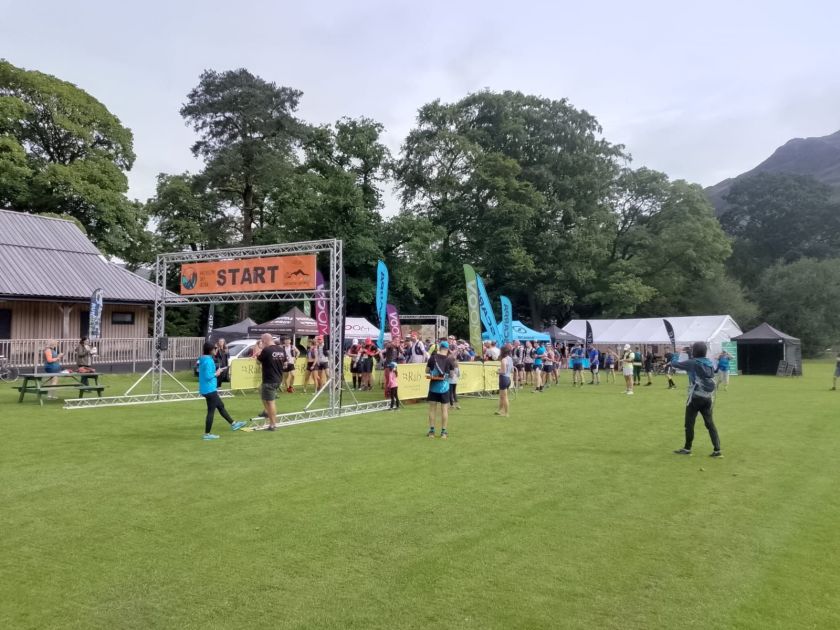
The ascent was brutal, immediately out of the starting field onto the steep grind up to the top of Birks, 1,300 ft of elevation in that first mile alone. It would have been hard in any circumstances, but I knew that and had been training for it. What I wasn’t prepared for was the awful humidity coming up through the bracken, and for my body to decide that this was the time to hit me with my first full-blown hot flush. The combination left me fighting waves of nausea, which could only be controlled by slowing down to a virtual crawl.
Luckily I wasn’t alone. Another runner was struggling in the same way, so we paired up and kept each other going as we crested Birks and moved out of the humidity into blissful cloud and breezes. But the nausea wasn’t done with either of us yet, and after a respite over St Sunday’s it came back in waves as we climbed to the top of Fairfield. Slowing down with lots of pauses saw us through, but the clock was ticking and the cut off at the Kirkstone check point was starting to look more and more like a dream.
The next section was a joy as we trotted down Fairfield and over Hart Crag and Dove Crag: perfect mountain running terrain and I was starting to feel properly good for the first time this race. Chris and Tomos were waiting on the slopes of Dove Crag, just the boost I needed, and as we made our way down to Scandale Pass I started to let myself think that we might actually make the cut off. Which is where my lack of local knowledge really showed, as we arrived at the foot of Red Screes with just eight minutes in which to run 1.5 miles with 800ft of elevation. An impossible task, so this was the moment when I fully accepted that my race was over.
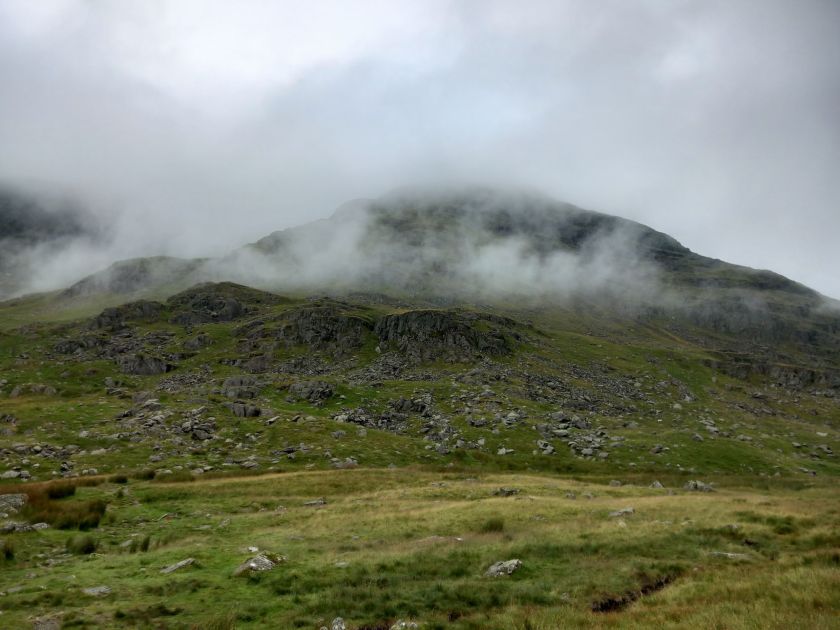
In the immediate aftermath of the race my overriding feeling was despondency. I had given this race everything, but it hadn’t been enough. I didn’t have the energy to go over what had gone wrong, couldn’t face thinking about the future, and could quite happily have gone to bed and hidden from the world for the foreseeable future. Happily, a couple of days later I’ve slept well and am no worse for wear, barring legs covered in midge and horsefly bites and a considerable dent in my pride. So now is the time to take stock and consider both what went wrong and how to fix it:
- More hill training would have made that initial elevation easier. The hill work I did was good, but I should have started it months earlier. That’s an easy lesson learnt.
- How do I deal with heat and nausea better? This is what finished me off, and it felt on the day as if it was entirely unavoidable. But I know that there are bits of kit that might be worth looking into, cold towels/buffs etc, so some research and practice there is needed.
- On a related note, that hot flush was a significant contributory factor in my overheating, and I know far less than I should about how to manage them in the moment. Can I reduce the likelihood at all, or see it coming before it hits? Can I double-patch on race day if needed? Lots of research needed here.
- Timing. A major race on the first weekend of the summer holidays worked logistically for my family, but it’s been a tough year, and that psychological need for an ending and time to rest and recover clashes badly with gearing up to a race. I need to think about my own state of mind when I book a race, not just logistics.
- Am I booking the right races? Do I even want to be doing races at all? I love running in the mountains, doing routes that demand I use my hands to scramble over multiple peaks. But doing these routes as races adds a whole other dimension of time pressure, and at this moment in my life I need everything to go absolutely perfectly in order to meet the cut offs. And when does everything ever go absolutely perfectly?
Perhaps this is my biggest take away from the event, that the runs I love the most don’t have to be the races I usually choose. I like having the odd race to focus on, but they do not have to be the pinnacle of what I’m aiming to do with my running. The runs that make me happiest are hard to access from Cardiff, there are no rocky mountains on my doorstep here. But there are rolling hills, forestry tracks and coastal paths that are nearly as good, and no lack of races on all of them. So I have a plan for the next 12 months: some local races, that I have a better chance of actually completing, and which will keep me moving well, ready for the mountain running I love when the opportunity arises.
I am still disappointed with how it went, and my pride could certainly do with the boost of entering a race I have a chance of completing, but all of that is actually ok. I’m still here, still running, and looking forward to finding out what overly ambitious race I’m going to put myself into next year!


 I Run Free