Stories and Rambles

Learning to Stop

It feels strange to find any sense of pride at all in a failed run, and there is no other way to describe this morning’s attempt. Yet if I look hard enough, there is a little bit of pride trying to show its face from behind the frustration and disappointment. We talk often enough about listening to our bodies, working with them rather than against them, but actually doing so isn’t always that easy. Listening, then, and acting upon what we hear, is worth reflecting on.

I thought I felt quite good when I got up this morning: I woke up easily, had time for a quiet cup of tea and some breakfast before anyone else woke up, and happily pottered about making sure I had enough fuel and water for my planned long run. It was already a warm morning and I was conscious that I was doing this run a day earlier than I usually would due to other commitments tomorrow, but was confident that just taking it gently would more than compensate for the change in routine. As I laced my shoes and found the GPS on my watch, I was happy and excited to be heading out to run with friends on such a beautiful day.

The run to our agreed meeting point felt hard, but early miles often do until I settle into my pace and find my running head, so I wasn’t unduly worried. But I couldn’t settle, my legs just got heavier and heavier, until I found myself needing to do short walking sections just to keep going. Clearly this run was not going to plan, and I started to realise that I was not going to do the 11 mile route I’d planned for today. Oh well, I thought, I’ll run up the zig zag path to the top of the first hill, then carry on to the view point and turn back from there. Afterall, running up hills has woken me up on many a run in the past, the change in stride length, pace and effort reminding my body of what it’s supposed to be doing.

No such joy today. I barely made it to the top of the zigzags, then had to walk the last stretch to the road. Time to accept that the only real option at this point was to go home. Not being alone at this point really helped, having two experienced runners kindly reassure me I was making the right choice is probably a large part of why I’m not too disappointed with myself right now. What really struck me, though, was how everything got even harder once I’d made that decision, my pace dropping and dropping until I came to a stop and told them to go on ahead, that I’d take the quickest route back home once I’d walked a bit more.

I surprised myself by running again towards the end, setting tiny goals of the next junction or bus stop, then extending it as I went. Until the gradient of a bridge was too much and I hit stop on my watch, very slowly walking the last few hundred meters. I arrived home utterly exhausted, too tired even for tears. I’d been out of the house for less than an hour and a half.

Could I have changed anything that might have made a difference? Perhaps. I suspect that yesterday’s weights session had tired my legs more than I realised, and running the day after a session is curiously harder than running on the same day. I went to bed a little late, but got up later too, so that shouldn’t have had too big an impact. I may have been a little dehydrated after a hot day yesterday, but not significantly so, and I think I had that in hand with water and electrolytes as I ran. The biggest single issue is likely to have been a difficult week catching up on me, not something I have much control over, and a very big part of why I need to run, so not an unusual situation.

The simple truth is that sometimes, those myriad threads that weave together to make for a good run just don’t connect with each other, and the whole thing unravels. Not for any one reason, but for many, all combining to pull apart even the best laid plans.

Once upon a time I would have tried to keep going anyway, angry with myself for seemingly failing. I know better now. There are times when pushing is the right thing do, but pushing at the wrong time causes far more problems than it solves: injury; debilitating exhaustion; anger and frustration at oneself to name just a few. At these times, cutting it short is not a failure but a positive act of self-care, of self-preservation; a statement of intent, that normal service will be resumed shortly, once my body has had the recovery time it clearly needed today. A day or two is all it is likely to need to ride out this little storm.

I would far rather have done the run I’d planned today, enjoying the sunshine and the company of friends. I am disappointed that it didn’t go to plan, and frustrated to have a ‘lost’ an opportunity for what could have been a great run. But I can choose not to dwell on it, to simply take today for what it is and look forward to the next run instead. Not berating myself feels unexpectedly empowering. And this is definitely something to be a little bit proud of.

Looking Forward

After my year of peaks and troughs in 2023, I started this year with a new approach: nothing planned, no race commitments, simply a determination to do more and to do it wisely. As we approach mid March, I think it’s going fairly well. I’ve consistently managed to do two strength sessions in the gym each week, and my running mileage is building up slowly and steadily. A minor ankle twist this week has been frustrating, but nothing worse than that. All in all, a fairly positive start to the year.

Is this what it has actually felt like while I’ve been running? Sometimes. I’ve done short runs that felt stronger than I expected, and long runs in beautiful landscapes that made my heart sing. Running without a race to train for has been liberating; I’ve pushed myself gently, without any time pressure whispering in the background, and my body has responded willingly. These early months of the year have felt like a space to breathe, to take stock and assess exactly what it is I want to get out of this year.

In years to come (that mythical period when my time might be my own again), I will be quite happy to avoid races entirely, to make my own adventures, both solo and with company. But right now, at this point in my life, managing time is more challenging. As both a parent and a carer, periods when I am not on call have to be negotiated, fitted in around other needs, arranged so that I can confidently change my focus. For a little while at least. Planning more than a few days ahead is full of variables and fraught with challenges, so I rarely lift my head above the parapet to look too far down the line. But an empty calendar is frightening too, all that time that can so easily slip away, unused and easily forgotten.

So a couple of weeks ago I forced myself to look ahead and make a commitment. I’ve found a race that works logistically, and which ticks all the boxes I wanted to tick this year: mountains, scrambling, a good distance (but not too far), and not too many entrants. An 18 mile/2000m of ascent sky race in the Lake District in July. It makes me happy just thinking about it.

The year ahead, so full of variables and unknowns, now has a fixed point, a moment of certainty to anchor the coming months. That fixed point then tracks backwards, creating more fixed points as I start to thinking about increasing mileage and fitting in some mountain runs. And so the year in front of me now has a structure. Admittedly it’s a loose structure – my horror of training plans certainly hasn’t lessened over the years – but one which gives me an outward focus when I need it, and a reason to keep pushing on.

There is no justifiable reason why ‘I have a race to train for’ should be any more compelling than ‘I need to run’ as an explanation for why I run. But when life throws endless demands at us, turning our own needs into demands sometimes makes prioritising them feel easier. I remain ambivalent about actually racing, but for the time being, if that’s what it takes to push me into committing to a route and a date then so be it. I have a fixed point now, guiding me forward and upward. St Sunday Mountain Race, here I come.

Snakes and Ladders

I’ve just been out for my last run of the year, dodgy the rain (mostly) on a short loop down the side of the river Taff and back up along the Ely, my tired body happy to just achieve moving for today. 2023 is going out with a whimper. Which feels appropriate for a year that started with covid and has been peppered with illness and injury.

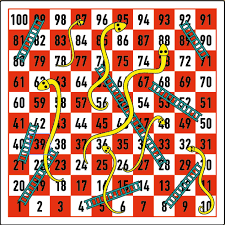
As I look back over the year (studying my Strava data, going through my photos), what emerges looks like a giant game of snakes and ladders. I can picture myself as a counter on a board, desperately trying to move forward but repeatedly being thrown back down the board by one problem or another. The snakes rear their heads with no warning and take you down fast; climbing back up the ladders again is another matter entirely, frustratingly slow and ponderous, with no guarantee of getting back to where I started. Whether I can win this game or not remains to be seen.

What would ‘winning’ even look like? Running further? Faster? Or just more consistently? My sister reminded me recently that we are in this for the long haul; that if we expect to be running into our 70s and beyond, intelligent recovery is absolutely key. I turned 48 this year, and I know that my body is not behaving in the way it was even just a couple of years ago. To keep going means looking after myself a little more than I have been doing, really focusing on what my body needs, perhaps being a little more accepting of the days when moving at all is enough. Maybe this is what ‘winning’ actually looks like: keeping going and enjoying it, without breaking myself in the process.

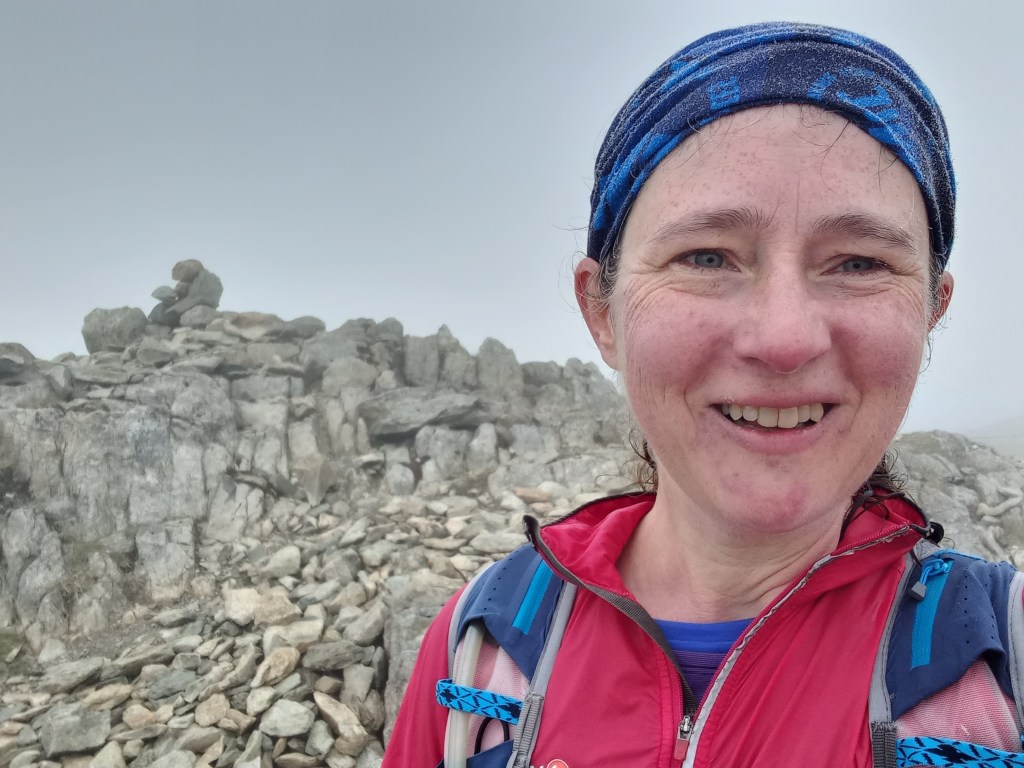
If that is winning, then I failed quite spectacularly this year. Coming back from a sprained ankle to run my second ultra just three weeks later should really have been the high point of the running year. But an invitation to join a friend in Norway some six weeks after the ultra was not something I could turn down, so instead of recovering properly I worked through some foot niggles and got on a plane to Trondheim and my first ever sky race. It was everything I could have hoped for: technical, stunningly beautiful, peaceful and a proper adventure (I got lost, I got stuck in a bog, I scrambled, and I fell over a lot). I ran nearly all of it on my own. It was also significantly harder than anything I’d done before, so much so that getting timed out on the second summit was not a disappointment so much as a relief that I could carry on enjoying the rest of the day without worrying about how I was going to get up the final peak in time.

It was also the final straw as far as my body was concerned. I’d randomly fainted a few days before the race, which was probably a sign that I was pushing things, then a few days after getting home I came out in hives. Everywhere. For over a week. There was no obvious cause that I or the GP could identify, so I concluded that my body was giving up on the subtle hints and had started shouting at me ‘you need to stop! Now!’ Not listening was no longer an option. I stopped, rested, and started to really think about what I had done this year, and what was going on behind the scenes. So much of what influences our running is entirely outside of our control. Very sadly, I’ve learnt that that includes my children’s mental health, and long periods with both of them too unwell for school this year has left its mark on all of us. There is no doubt that running is a key part of how I manage my own mental health, but I’m forced to acknowledge that it is not without risk.

So what will 2024 have in store? I have a vague memory of making a decision, probably about this time last year, to be active every day in 2023. The vagueness of my memory pretty much sums up how well that went, so there seems little to be gained in making concrete plans at this time of year. Afterall, if I never commit to training plans because I know life will get in the way, why would I think that making a plan for a whole year could work?

The answer seems to lie not in working harder, but in working wisely. Weekly strength training is already helping me feel stronger, so twice weekly would be better. Running consistently, even if it means shorter runs, will pay dividends down the line. Even more importantly, I need to find running goals that inspire without pressurising. Two of my best runs this year were training runs in the Lakes, taking myself off into the hills alone, finding my way, trusting myself. These two runs encapsulated everything that I love about running. They are precisely what I need more of this coming year.

As for the rest, there will no doubt be a curve ball or two to come my way. I cannot possibly plan what they’ll be or when they’ll come, and I know I need to learn to accept that limitation. There’s only so much that can be ploughed through before something starts shouting ‘stop!’ Ideally, 2024 will see me learning to listen to that shout a little earlier, stop sooner, and recover faster. If I can achieve that then 2024 will be a success. Well, provided there are some mountain runs in there too.

Binge Reading

Before there was running in my life, there was reading. I was the child with her nose stuck in a book, progressing to the teenager who hid books under her schoolwork, far too engrossed in tales of Middle Earth or Arthur and Morgaine to do much more than pretend to be studying. I read to hide from the world and to make sense of it all at once, to meet characters who would stay with me and show me new ways of seeing. That need to suspend my disbelief and become immersed in another world has never left me, but the opportunity to do more than snatch a couple of chapters in the evening is rare these days.

My bedside selection.

I read for the same reason that I run: I need to. And just as there are different ways to run, so there are different ways to read, many of which are dictated by the time pressures or mental capacity life allows me. The season of coughs and colds is rarely the time for a challenging read, when staying warm and not coughing all night is challenge enough. But there is a silver lining to the grey time of year, certainly now the children are old enough to not need constant attention: the perfect excuse to shut the bedroom door, cwtch up on my bed, and lose a whole afternoon to a book that I can read in one sitting. My son has named this ‘binge reading’.

There is an art to choosing the right book for a binge. The wonderful world building novels are usually too long, and those where every word needs to be savoured require more time and thought than a binge allows for. But neither can it be something throw away, a careless novel that leaves me cold and uninterested. The answer, very often, lies in crime fiction. Formulaic enough not to be too challenging, full of cliffhangers and red herrings to keep me reading, with the satisfaction of having solved a mystery at the end.

When binge reading works the rest of the world stops; the million and one thoughts clamouring for attention go silent and all that matters are the words on the page. Re-emerging into the world afterwards feels awkward, as if I’m waking up from a long sleep at the wrong time of day. But it is a good feeling. My brain is calmer, ready to focus again, and ready to face whatever the day throws at me. In fact, I feel like I do after a run.

All good books do this, they open up the world and give us a space in which to stop and breathe. They have been my lifeblood for as long as I can remember, my escape mechanism that makes the world more real. Reading and running sound so different, one requiring stillness and the other, movement. Yet in my mind they are inextricably linked, two necessary acts that provide a balance to the chaos, a means to understand it and to carry on. I run better when I have a book that has caught me, waking me up and making me feel more alert. And I read more thoroughly when I’m running well, my body ready for a rest but my mind active and interested. I intend to feed both these needs this winter, as often and as fully as I can.

Injured Again

Two years ago, almost to the day, I was coming to terms with my first serious running injury: a stress fracture in my left shin. The repercussions of that injury have been significantly more complex than I anticipated as I was forced to acknowledge having put myself at risk of REDs (Relative Energy Deficiency in sport). I’m still learning how to fuel properly and safely, and still making mistakes, as I demonstrated far too well during VOGUM last year! It turns out that I am also still learning how to properly heal my leg, and still making mistakes there too.

I’ve had a niggle back in my left lower leg for a while. It’s been a weak area ever since I injured it, and perhaps unsurprisingly, I had just learned to live with it. Part of recovery, after all, is learning when a niggle is just a niggle, and not getting too jumpy every time something feels a little off. Plenty of good stretching felt like the right answer, it didn’t feel worse when I ran, it was just a quiet difference in my body that I lived with.

Cosmeston country park

Only on Tuesday morning my leg stopped quietly whispering at me and gave a shout instead. I had driven to Cosmeston for a much needed trail run, my brain desperately crying out for an escape from the city, from everyday life, and for the level of focused concentration that I can only find on trails. The niggle was still there, as it had been for a couple of months now, but no more than that. Right up to the moment when I started to run. Those first few steps, still in the car park, felt tight and painful in a way I hadn’t experienced in two years, and I’d be lying if I said there wasn’t a rather loud voice in my head telling me to stop immediately. But there was a louder voice telling me that I did not have a hope of getting through this week without that run. So I rationalised, told myself I was running on soft ground for most of the run, and just kept going.

In that moment there was no other decision open to me. I know that, even now, I would do the same thing, and indeed as the run went on I was convinced I’d made the right decision all round: my leg pain was easing, and I felt so much calmer than I had done before I ran. Those feelings, physical and emotional, lasted long enough for me to put my kit back on later in the day and head over to my Tuesday evening running session with Run Grangetown. I was aware that my leg was extremely tight, and intended to take it easy, but the moment we started a very gentle jog in the warm up I realised that I simply couldn’t run on it at all. It hurt now, and had stopped working properly. This was not, it turns out, a little niggle that could be ignored.

A couple of days later I was back in the familiar surroundings of Pete’s physiotherapy room, terrified that I was about to be sent off for another x-ray for another suspected stress fracture. Instead, I left half an hour later with a good understanding of how and why my soleus muscle isn’t doing what it should, a plan to fix that, and the reassurance that I wasn’t looking at a stress response injury. I’d caught it in time, done the right thing, and should be back up and running in a few weeks. The relief was incredible.

It would be very easy at this point to give myself a telling off. There were multiple moments where I could have stopped and asked for help before I got to the point of needing to actually stop running for a while; I knew something was wrong almost straight away on Tuesday morning, yet I still went ahead and ran. But I’m not going to do that to myself. As I talked it through with Pete he helped me to see that the decisions I had made were the right ones at the time, that I’d still been looking after myself in the best way that I could. None of us go out for a run planning to come home injured, yet it happens to most runners at some point in their lives.

As with every other aspect of life, attempting to run injury free requires us to manage risk. Eradicating the chance of injury is impossible, so we do what we can to mitigate it: we buy shoes that fit properly and support us; we warm up carefully, stretch out afterwards; we fuel properly, and rest when we need to do. Above all else, we learn to listen to our bodies. So when those injuries do occur (hopefully rarely, and in a very minor way), we have a choice. We can rail against it and blame ourselves, or we can accept that life is complicated, that by mitigating some risks we might exacerbate others, and that to be injured is not a sign of failure.

A period of enforced rest and recovery is not what I wanted in my life right not. But neither is it something that is going to eat away at me, another voice of nagging self doubt that focuses on where I went wrong. Injuries happen, despite everything we do to avoid them. They are a reminder of our physicality, and yes our vulnerability, but they are also a reminder of how strong we are, and how well we can bounce back, again and again and again.

Giving myself a push

Last night, at my usual Tuesday evening running group, I did something I haven’t done in a surprisingly long time. I pushed myself. Hard.

At the top of the zigzags earlier this year.

It wasn’t a new session, although it was one of my favourites: hill training on the zigzags. The difference was all in me, driven by having left the house full of pent up frustration at life in general, and in desperate need of an outlet. Again, this isn’t new. I have known from the moment I first started to run that my primary driver is my own sanity; that I need to run in order to keep myself on an even keel. This was linked to speed when I first started running, mainly because I didn’t have much time to run, and needed to squeeze in as much distance as possible. In recent years, however, I have interpreted this need as a need for movement, for a change of scene, for an escape. And that interpretation has had a dramatic impact on how I train.

This change very clearly began in lockdown, when running was the only way to fulfill my need to escape the city. I still watched my pace, but distance steadily took over as the more important statistic. Then, perhaps inevitably, came injury, a stress fracture that put paid to all my planned escapes. Recovery was slow, yet somewhere along the line recovery quietly slid into training again as I prepared for my first ultra marathon. Everything was about distance and endurance, pushing myself hard to keep going, and then keep going some more.

In many ways, endurance training was ideal. I had the perfect reason to go on long, beautiful runs where I told myself I needed to learn how to take it slowly, how to stop and refuel, how to walk when I needed to yet still be able to turn the walk back into a run. What I realised last night is that whilst all of that was true, it was also an excellent cover story to hide the fact I was taking the pressure off. If I had to learn to push myself to keep going all day, then clearly I had to focus on not breaking myself by pushing too hard.

I have a deeply ingrained fear of breaking myself. The mental list of responsibilities combined with the ‘what if I can’t . . . ‘ narrative pulls me up short every time. I’ve known this from day one of starting to run, and told myself it was part of adult life: compromise, cutting corners, being content with good enough. Every now and then, with enough safety measures in place (husband at home with the kids, running friends around me if something went wrong, not too far from home), I could give pushing myself a go, and it always felt amazing. But as life has become more complicated, I tell myself I’m too tired to push; just take it easy and enjoy the run, it’ll do you good, and you can’t risk another stress fracture. And it does do me good. Up to a point.

What I had forgotten is that pushing towards our limits doesn’t mean we get close to them. It means that those limits get pushed further and further back. The things I’ve been scared of were still there last night, but I stopped listening to them, and listened instead to what my body could actually do. I let myself push hard, let my mind empty of everything except the physical sensation of running as hard as I could. And I wasn’t broken at the end, I was fizzing with life and strength.

It’s early days still. Yesterday I had my security net tight around me: close to home, knowing the boys were looked after, and with the awesome Run Grangetown team for company. But I’ve started to realise that pushing myself hard doesn’t have to leave me broken; done right, it leaves me with my limits pushed further back and my world of possibilities widened. After months of worrying that I was going backwards in my training, it seems that all I needed to do was give myself a good, hard push. That is incredibly empowering, and is exactly the motivation I needed as these dark evenings start to draw in.

Dare Valley Trail Half Marathon

When I signed up for this race back in March I was looking for a focus, something to help get my running back to some semblance of a routine after a fairly dreadful start to the year. I would love to say that’s what happened, but life just isn’t that straight forward, and my running routine still hasn’t materialised in the way I’d hoped. But last year’s ultra was still in my legs, and in my brain, and I crept the miles up enough to get myself to the start line this morning after all.

One of the most unexpected benefits of running an ultra is the change in perspective it leaves you with. I was under no illusions as to how hard today would be given my minimal training, but I found myself able to hold two seemingly disparate thoughts in my mind at once: it was going to be hard, and I knew I could do it without breaking myself.

That confidence is almost as hard to articulate as it is to find, buried deep inside under the doubts and the questions. Nor can it be too loud a voice, when there is still hard work to be done and a body to prepare. But taking away the doubt, having a carefully considered answer to the fears and questions, these were of immeasurable value as the race drew closer. By the time I walked to the start line this morning I had a huge grin on my face, bouncing with excitement, about to run a race with my sister for the first time.

The route itself was ideal: relatively flat around the lake for the first mile, then a fairly sharp pull up to the ridge line to reach gently undulating forestry and trails before a final, exhilarating descent. The weather was very much in our favour: sunny but not too hot, with a good breeze to keep us cool. The downside of the lovely weather was the lack of good muddy sections, although I tried to make up for that by getting tangled in a rather large branch and coming to a stop face down on the trail. No harm done, just a few bruises and a mouthful of dirt. And a bit of dent in my pride!

With checkpoints at 3, 6 and 9 miles, and encouraging words at each, the miles flew by. Before we knew it we were past 11 miles, with a lovely long downhill to see us in to the finish. So we relaxed a little more and enjoyed the adrenaline, right up to the moment where the path had shrunk to a very tiny track with a ditch and an old, barbed wire fence in the way. Clearly this wasn’t right. Somehow we had missed the (very clear!) markers that sent the route off to the left, leaving us trudging back up that lovely descent wondering where we’d gone wrong and trying not to feel guilty about the two other runners who’d followed our lead. Lesson learnt there, never rely on anyone else’s route finding! Fortunately we’d added less than half a mile, and had enough of the descent left to thoroughly enjoy the final mile.

I crossed the finish line side by side with my sister, full of the absolute joy that a great run can bring, and knowing that I’d been able to share that with her added a whole extra layer to that joy. I don’t do races very often, so they need to be special to make me commit to it. A beautiful route, a great event team, and my sister to run with very definitely made for a special one today.

A Stinky Celebration

There’s no getting away from it, running kit reeks. Those once shiny shoes that have carried our sweaty feet for hundreds of miles, the race t-shirts we wear so proudly, they all develop a pungent aroma that screams ‘runner’, sometimes as soon as we put them on. There is a whole industry dedicated to helping us eradicate these smells, and there’s no doubt that regular washing with technical products will help for a time. But really, it’s just delaying the inevitable. There will come a point where we take a deep breath in and realise that what comes with it is the unmistakable scent of runner.

As a society, we seem to be obsessed with the performance of cleanliness; it is not enough to look clean, we have to smell clean too, saturating our clothes and bodies in an array of chemicals to prove to the world that we have indeed washed and made ourselves acceptable for the public space. And as a 46 year old mother of two boys, I fall into a category for whom this performance is twofold: I should present my children to the world in just as clean a state as myself.

There is a little bit of leeway there. Boys are still permitted to be mucky, and coming back from a trail run splashed with mud is almost a badge of honour. But ‘mucky’, with its connotations of fun, sport, and childhood, is a world away from ‘dirty’ and the unpleasantness that comes with it; unclean, unsanitary, bordering on disgusting. Yet dirty is the word that springs to mind when faced with a damp pile of stinking running kit.

So do I feel dirty and disgusting when I catch a whiff of myself during a run, or pick my leggings off the floor after I’ve peeled them off? No. Not one bit of it. What I feel is liberated, even a little subversive. When I’m in my kit, red faced and sweating, my face decorated with salt crystals, I am almost certainly going to end up stinking, and I do so because I use my clothes and shoes time and again, out in all weathers, alone or in company, running to keep myself sane. My head needs me to run; my body needs me to run. Smelly kit is a testament to all those miles, a reminder that I can do this, that I can push myself and my limits and put all other cares aside, even if only for a little while. It is a quiet but forceful refusal to consistently perform at least one aspect of ‘adult woman and mother’. The dirt and the smells prove to me that my running self has pushed all other selves aside and taken centre stage. I like that self, and I am very happy to spend more time with her, stinky kit and all.

Washing It All Away

2022 has not started well. Life has become complicated, and time consuming, and my running has dwindled away to snatched, short runs here and there. Runs that may or may not be interrupted and cut short. Some of this is deliberate – I’m taking my own advice here, and listening to my body when it craves rest – but much of it is circumstances that I can’t avoid. January and February can be bleak months at the best of times, so getting through them without the escape of a good, long run is proving quite a challenge.

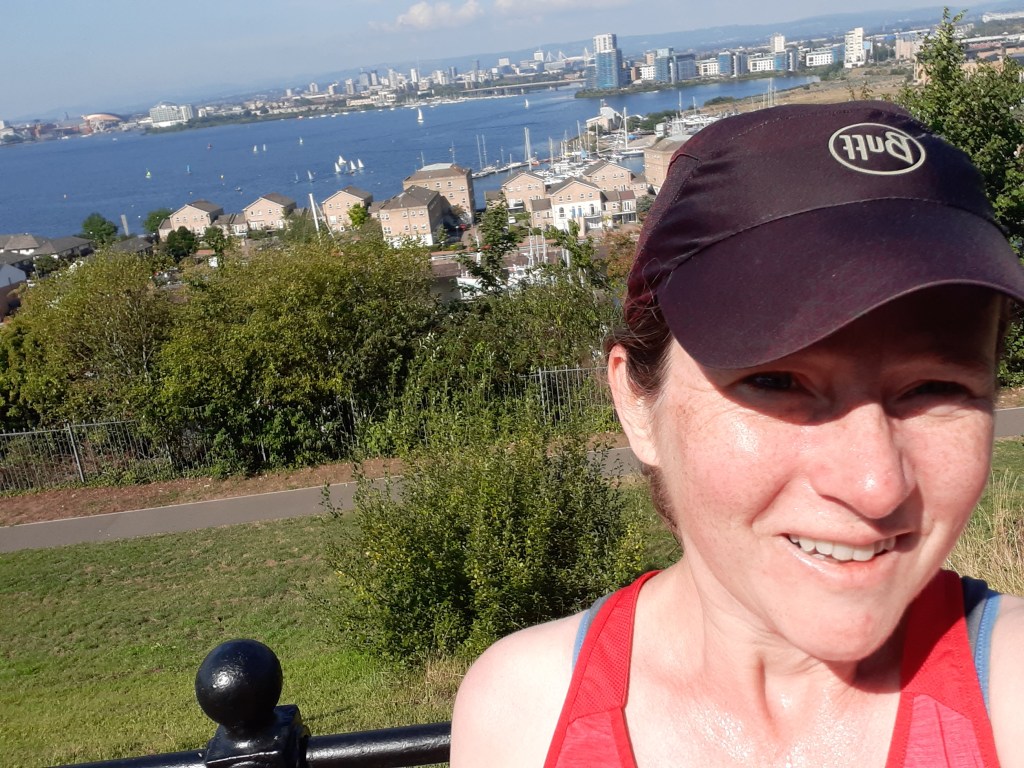
This morning, however, I was reminded that those soul cleansing runs don’t have to be long, or even take me out of the city. I put my head above the parapet yesterday, put out a call on our running WhatsApp group to see if anyone fancied a soggy run this morning, and to my delight I found myself back by the park at 9 a.m., all set for a run round the bay with a couple of friends from the running club. This is a run I’ve done so many times I could run it blindfold, or so I thought, until they took me somewhere new! And it was a new hill!

Little changes like that seem to open up the world again, when it has felt so closed. Pushing up hill, rain dripping off my nose, still just about able to talk, followed by the joyful release of a downhill section; these are the moments where I feel most alive, and nothing can keep the smile off my face.

Running conversations ebb and flow, fleeting thoughts sparked by what we run past as much as by the worries and interests that usually occupy our thoughts. Silences are normal, and comfortable, coming and going as we run, and in those silences the other sounds creep in: the masts on the sailing ships ringing in the wind; waves slapping the shore; the rain pattering on my jacket. I love the sound of the rain, from the thud of large drops to the gentle tapping of light rain. It finds its way into me, the sound washing away the tumble of thoughts that go round and round my head, cleansing me as the rain itself washes over my skin.

The mental stillness brought by running in the rain, and by running with friends, is such a gift. One to hold onto, and remember, as these bleak, winter months slowly, finally, come to an end.

A Hard Truth

Running is always the answer. This has been my mantra since my very earliest days of running, as I started to realise that there was very little that couldn’t be cured with a run. Feeling stressed? Run it off. Tired? Re-energise with a run. Fighting off a cold? Get out there and head it off at the pass. Time and again life’s difficulties were resolved, or at the very least temporarily stalled, with a run.

To even contemplate questioning this fact has felt almost sacrilegious. Throughout the pandemic the benefits of running, particularly on our mental health, have been extolled repeatedly across the media, and rightly so. Many of us have longed for the freedom of lacing up our shoes and getting out of the door, when so many other freedoms have been curbed. There is no doubt in my mind that running has kept thousands of people fit, sane and happy in these horrendously difficult times, myself included. So how could running not be the answer?

Training, by definition, involves placing the body under controlled, time limited stress. Whether that means chasing a PB, pushing distance or elevation, maintaining a running streak, or simply continuing to run for pleasure, all running is training, carefully stressing the body in order to help it grow. And in so doing, our mental health benefits from the physical exertion, from being outdoors, from the growing confidence in what our bodies can do if we look after them and push them just hard enough.

A perfect spot for a short rest.

But there is a finite amount of stress that a body can deal with at any one time. Injuries are the inevitable outcome of too much physical stress placed on the body too quickly with insufficient care or understanding of our bodies’ needs, as I know to my cost. Having to come back from injury slowly and carefully is hard and frustrating, but there are few runners that avoid it completely, and our conversations are littered with references to aches and niggles, how to look after them, and how to avoid them becoming worse.

What we don’t talk about so often is when the aches and niggles are emotional rather than physical, when the need for rest is driven not by pain but by exhaustion or mental stress. Running has a huge impact on our mental health, but the reverse is also true – our mental health has a huge impact on our running. There is a significant link between life stress and physical injury, a link that seemed so obvious when my physio pointed it out, but one which we would all benefit from exploring further. If the amount of stress we can handle is finite, and that stress encompasses both physical and mental strain, then living through immensely stressful periods (like a pandemic perhaps?) is going to reduce our capacity to handle physical stress without injury. As with so much in life, it is a balancing act, and it’s when the scales tip either way that we run into difficulty.

So with that in mind, is running still always the answer? Broadly speaking, I am still firmly committed to answering ‘yes’. I rarely come back from a run feeling anything other than better, it is an outlet like no other and I could not be without it. But there are some sections of small print that need to follow that statement. Long term stress, or sudden, severe trauma, are as damaging to the body as illness or injury, and should be treated as such when planning runs at those times. There is no shame in reducing a long run, in taking it slowly, in acknowledging that caring for ourselves might mean running differently for a while.

If running is always the answer, the last thing anyone needs is an injury that puts a stop to it entirely. So if a day comes when lacing up those shoes is simply too difficult, be kind to yourself. Missing the odd run won’t make you less of a runner, but listening to your body might just make you a better one.