Looking Both Ways

My first run of 2025 was a thing of pure, defiant joy. I was a month post-surgery and finally able to run again, so I set off with Chris for a frosty 2 miles just to see how it went. My Strava from that day says ‘Felt amazing!’, which is exactly how I remember it – the joy of moving again, of my body feeling strong and full of potential. It was a very conscious decision to run that morning, knowing that I was seeing the consultant that afternoon for more biopsy results. I needed to know I still had it in me, just in case the coming months were going to be even less plain sailing than I was anticipating.

Which was exactly what happened. Four weeks later I had another ‘first run back’ on Strava after another operation, and this one was harder. There would end up being two more ‘test runs’ over the next two months, as first illness then radiotherapy put running out of the question for a while. I remember feeling tired and despondent, thinking I’d lost months of fitness and worrying that it would never come back, although looking back over my training log I’m surprised to see how much activity I managed to fit in. 

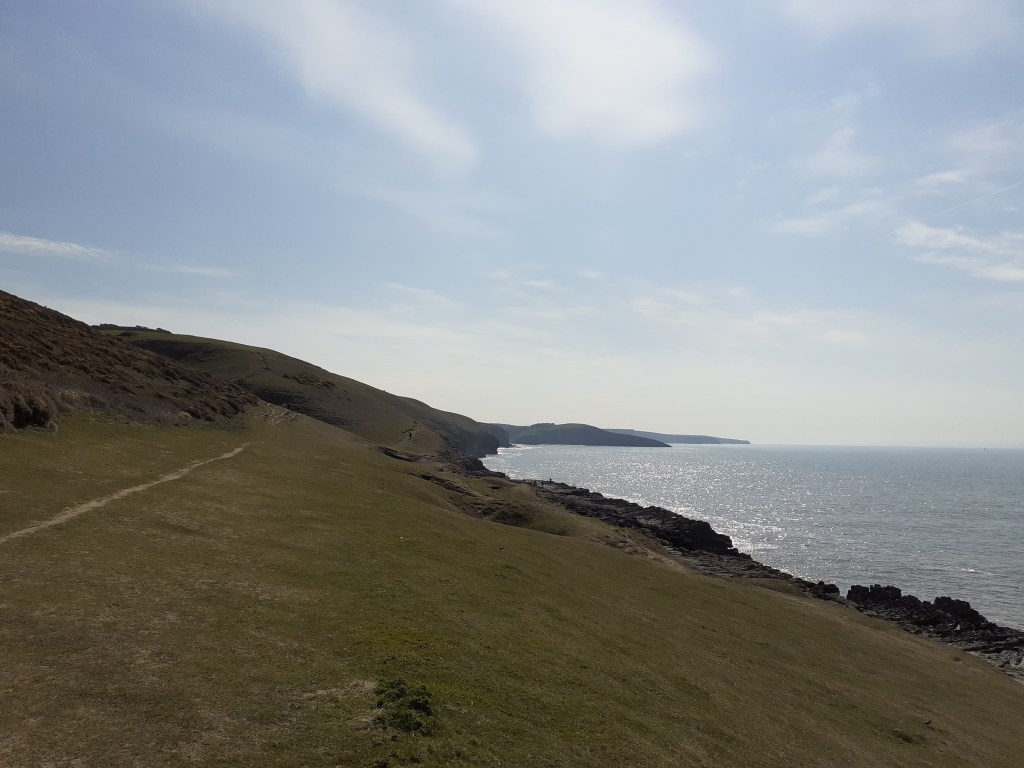
Back in the summer of 2024, before my cancer diagnosis and all that followed, I’d started to think seriously about how I was going to mark my 50th birthday in 2025. High on the list of options was the Gower ultra; easy logistics given how local it is, and a stunningly beautiful (if challenging) course. By the time I’d had both operations I’d fixed on Gower as my birthday run, but with less than seven months between finishing radiotherapy and lining up at Weobley Castle I was clearly going to have my work cut out to get there.

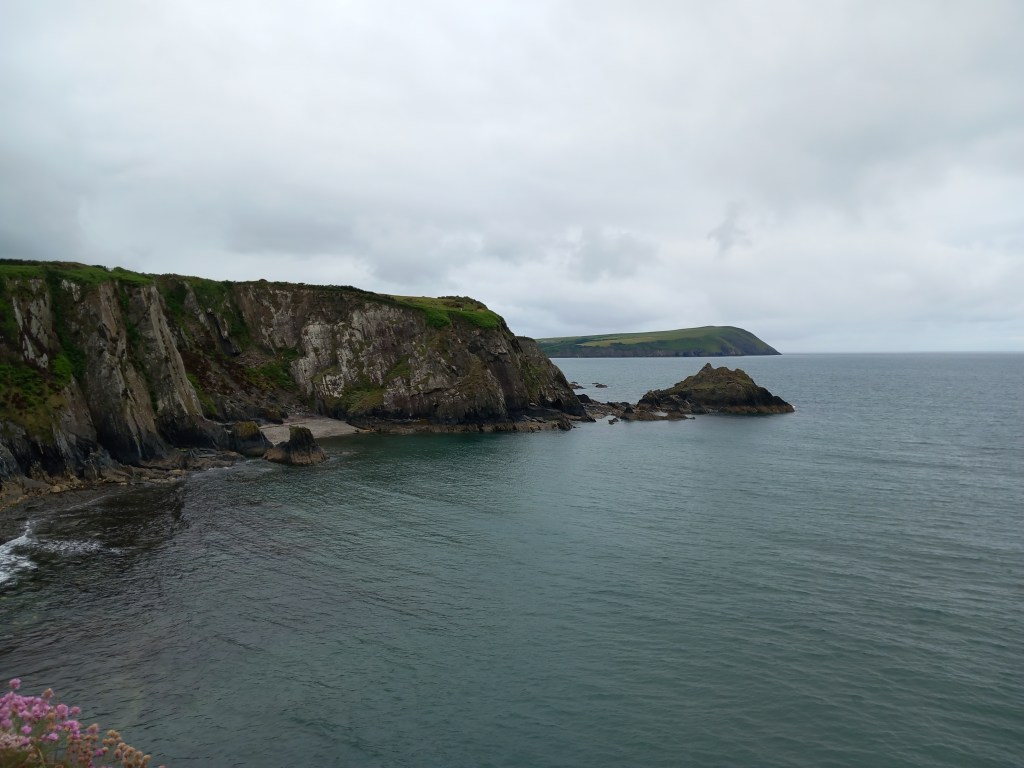
With the benefit of hindsight it’s probably fair to say that I was asking rather a lot of my body after it had already been battered by surgery and treatment. But my head really needed something positive to focus on, both a goal to aim for and some training adventures to plan. And the adventures in the coming months were fantastic. I ran in Eryri, the Peak District and the Lake District; explored the Bannau Brecheiniog on my own and as part of a women’s trail running weekend; took on a Long Distance Walkers Association challenge run in the Clwydians, and ran on the Pembrokeshire coastal path with my sister. And that list doesn’t include the myriad of local runs around Cardiff area, alone or with friends, that kept me going when the wild places were out of reach. 
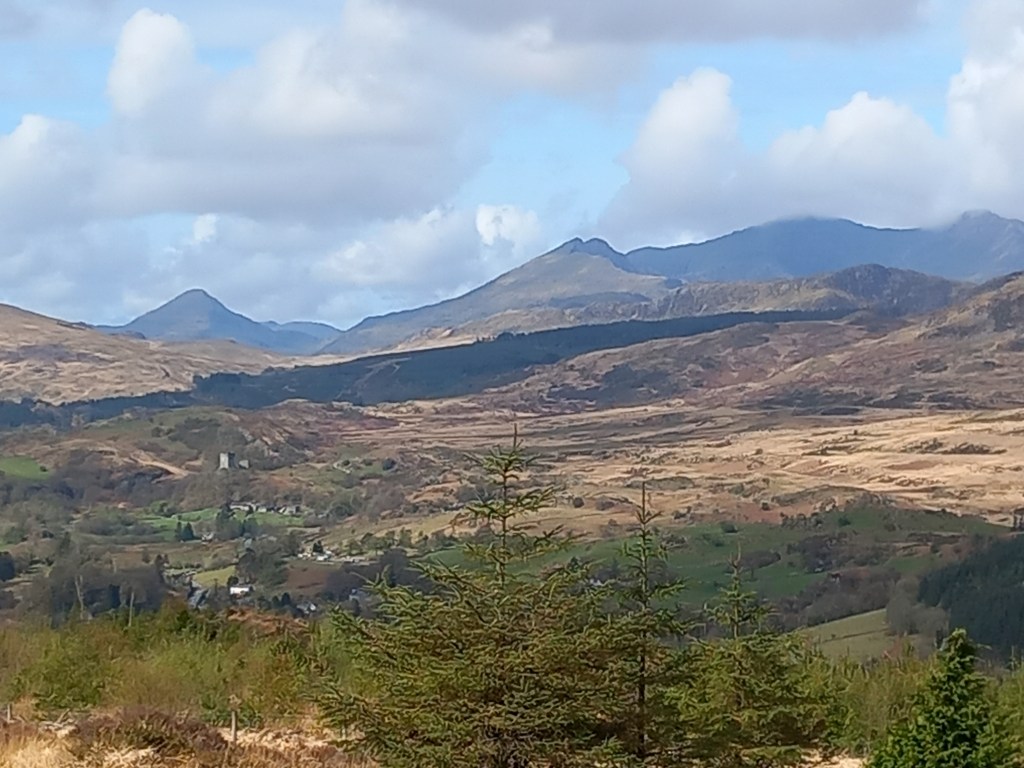
Those early months of 2025 loom large in my memory, colouring the rest of the year far more than I want them to. Because looking back at it now, this was very clearly a year of extremes, the depths of the early months countered by the highs (literal and otherwise) of running, and of the people I have around me. I only have to close my eyes and I can feel the knee deep moss I got lost in in the woods above Dolwyddelan, feel the gentle rain that washed my face around Llyn Elsi, or the wind that tried to push me back up hill as I came down off the Kinder plateau. Then there were all those wonderful Sunday runs that finished with coffee and a rocky road while we laughed at the state of ourselves, sopping wet, muddy, and happy. This is what I love most about running, that it strips away the pretence, the artifice, leaving us raw and open, our truest selves. 

That is what I want more of this coming year, the social runs and solo adventures that lifted me out of the depths. I am hugely proud of having completed the Gower race, but I don’t need to repeat that achievement this year. I haven’t got any races booked, nor even any ‘maybes’, and I think I might keep it that way for a while. I’m starting to find a nice training rhythm based on what makes me feel better about how I’m running, with no need for the pressure of a race date to get me out there. I don’t need to train for a particular event, it is enough to know that there will be opportunities to get into the hills at times this year, and that my training is about being able to make the most of those chances when they come. I came crashing down after Gower, exhaustion and multiple colds sending my fitness plummeting again, so my real aim for this year is consistency rather than peaks and troughs. 

The year is starting gently, picking my strength sessions back up at the gym, slowly easing into slightly longer runs again. With no looming race deadline I have time to focus on what my body is telling me, and the flexibility to adapt to whatever this year throws at me (and there is every chance that might include a last minute race or two). That is more than enough to be getting on with.

Tapering

With just ten days to go until my race, I am now well into the tapering period, that almost magical state where the training ends and your body has a chance to rest before the big day. Or something like that. The trick seems to be to rest without actually stopping, and to keep training while doing very little. Just thinking about it is enough to send me back out for a run to calm down.

I have two competing mindsets at the moment. The first is panic: I haven’t done enough distance; I’m so tired; there’s still so much to think about in terms of on-the-day logistics; what if I don’t finish? The second is calmer: for the first time ever I’ve done some structured training; that training has focused on hill work, and has gone well; I know I am experienced and confident on the terrain, and if I do DNF, so what? I’ve done that once already, and still had a fantastic day out in the hills. My aim is to enjoy it, not to break any records.

wp-1720628471770127110371367969898
On the summit of the Garth

Unlike races in the past, where I have obsessed about training close enough to the distance, this time I have changed the focus to hill fitness. I can’t claim any credit for that change, it came about after talking to the instructor of my weights class, a hugely experienced ultra runner, who advised focusing on hill work given the terrain of the race. So I ditched my scrappy plan of trying to get a bit further each week and went hard into hill sprints and reps at every opportunity, combined with some focused work in the gym. I’m feeling as confident as I can be that this will prove to have been the right approach. Unexpectedly, I discovered that lung-bursting hill sprints are an absolute joy. Then I took myself off on the train for reps of the Garth hill, summiting twice on the first session and three times on the second. These sessions were wonderful solo adventures, and the fact that I could barely feel them in my legs the next days was a confidence boost I really needed.

My final training run happened last weekend, a run up Corn Du, Pen y Fan and Cribyn in the Bannau Brycheiniog with some friends. And the mountains threw it all at us. We had hailstones on the summit, wind trying to whip our coats off while we hunkered down to add extra layers, driving rain, and then glorious sunshine. Oh, and I went both knees deep into a bog. Time constraints meant we cut short and turned back before our final peak, which briefly added to my concerns about distance, but I quickly realised that this was completely the wrong perspective. Shockingly, I hadn’t had a proper mountain day out for months, and given that my race is in the Lakes there is absolutely no guarantee of good weather. Last weekend was too close to race day for distance to matter, but reminding myself what mountain weather was all about, how to look after myself and others? That was invaluable.

Pen y Fan and Corn Du

So why the panic? The only training box I haven’t ticked is distance, in that my aim for a longest run was 14 miles and I only reached 11.5 (race distance is 18 miles). But that was a conscious decision, based on some serious consideration of what this race involves combined with my general fitness and past experience. In that context, losing 2.5 miles distance in training is more than compensated for by being fitter for the 2000m of elevation.

I had just managed to convince myself that there was nothing to stress about when the race email arrived, to bring me a whole set of new things. I have never before run a race with only 15% of the start line made up of women, and the list of people from running clubs in the Lakes, Eryri and the Peak certainly made this Cardiff based runner feel out of her depth. As a city-based female runner I feel like I have something to prove here, and I am in two minds about whether that constitutes an incentive or a burden. I will no doubt argue it to myself from both perspectives over the coming ten days. I am also fairly confident that the moment I start to run, that question will cease to have any meaning at all. All that will matter is enjoying something I’ve worked so hard for, doing the best I can do on the day.

There are three runs ahead of me now, getting steadily easier, and two gym sessions with decreasing weights. This is an actual plan, a structured tapering period rather than just winging it as I usually do. The logistics still need thinking about, but with a husband who knows the Lakes like the back of his hand, I really shouldn’t be worrying about that either. I’m starting to think that this is what tapering is really about, reducing the stress on the body to give the mind the chance to adjust to actually doing the event, after all these months of it being something on the horizon that isn’t quite in reach. St Sunday Mountain Race, I think I’m ready for you.

Injured Again

Two years ago, almost to the day, I was coming to terms with my first serious running injury: a stress fracture in my left shin. The repercussions of that injury have been significantly more complex than I anticipated as I was forced to acknowledge having put myself at risk of REDs (Relative Energy Deficiency in sport). I’m still learning how to fuel properly and safely, and still making mistakes, as I demonstrated far too well during VOGUM last year! It turns out that I am also still learning how to properly heal my leg, and still making mistakes there too.

I’ve had a niggle back in my left lower leg for a while. It’s been a weak area ever since I injured it, and perhaps unsurprisingly, I had just learned to live with it. Part of recovery, after all, is learning when a niggle is just a niggle, and not getting too jumpy every time something feels a little off. Plenty of good stretching felt like the right answer, it didn’t feel worse when I ran, it was just a quiet difference in my body that I lived with.

Cosmeston country park

Only on Tuesday morning my leg stopped quietly whispering at me and gave a shout instead. I had driven to Cosmeston for a much needed trail run, my brain desperately crying out for an escape from the city, from everyday life, and for the level of focused concentration that I can only find on trails. The niggle was still there, as it had been for a couple of months now, but no more than that. Right up to the moment when I started to run. Those first few steps, still in the car park, felt tight and painful in a way I hadn’t experienced in two years, and I’d be lying if I said there wasn’t a rather loud voice in my head telling me to stop immediately. But there was a louder voice telling me that I did not have a hope of getting through this week without that run. So I rationalised, told myself I was running on soft ground for most of the run, and just kept going.

In that moment there was no other decision open to me. I know that, even now, I would do the same thing, and indeed as the run went on I was convinced I’d made the right decision all round: my leg pain was easing, and I felt so much calmer than I had done before I ran. Those feelings, physical and emotional, lasted long enough for me to put my kit back on later in the day and head over to my Tuesday evening running session with Run Grangetown. I was aware that my leg was extremely tight, and intended to take it easy, but the moment we started a very gentle jog in the warm up I realised that I simply couldn’t run on it at all. It hurt now, and had stopped working properly. This was not, it turns out, a little niggle that could be ignored.

A couple of days later I was back in the familiar surroundings of Pete’s physiotherapy room, terrified that I was about to be sent off for another x-ray for another suspected stress fracture. Instead, I left half an hour later with a good understanding of how and why my soleus muscle isn’t doing what it should, a plan to fix that, and the reassurance that I wasn’t looking at a stress response injury. I’d caught it in time, done the right thing, and should be back up and running in a few weeks. The relief was incredible.

It would be very easy at this point to give myself a telling off. There were multiple moments where I could have stopped and asked for help before I got to the point of needing to actually stop running for a while; I knew something was wrong almost straight away on Tuesday morning, yet I still went ahead and ran. But I’m not going to do that to myself. As I talked it through with Pete he helped me to see that the decisions I had made were the right ones at the time, that I’d still been looking after myself in the best way that I could. None of us go out for a run planning to come home injured, yet it happens to most runners at some point in their lives.

As with every other aspect of life, attempting to run injury free requires us to manage risk. Eradicating the chance of injury is impossible, so we do what we can to mitigate it: we buy shoes that fit properly and support us; we warm up carefully, stretch out afterwards; we fuel properly, and rest when we need to do. Above all else, we learn to listen to our bodies. So when those injuries do occur (hopefully rarely, and in a very minor way), we have a choice. We can rail against it and blame ourselves, or we can accept that life is complicated, that by mitigating some risks we might exacerbate others, and that to be injured is not a sign of failure.

A period of enforced rest and recovery is not what I wanted in my life right not. But neither is it something that is going to eat away at me, another voice of nagging self doubt that focuses on where I went wrong. Injuries happen, despite everything we do to avoid them. They are a reminder of our physicality, and yes our vulnerability, but they are also a reminder of how strong we are, and how well we can bounce back, again and again and again.

A Hard Truth

Running is always the answer. This has been my mantra since my very earliest days of running, as I started to realise that there was very little that couldn’t be cured with a run. Feeling stressed? Run it off. Tired? Re-energise with a run. Fighting off a cold? Get out there and head it off at the pass. Time and again life’s difficulties were resolved, or at the very least temporarily stalled, with a run.

To even contemplate questioning this fact has felt almost sacrilegious. Throughout the pandemic the benefits of running, particularly on our mental health, have been extolled repeatedly across the media, and rightly so. Many of us have longed for the freedom of lacing up our shoes and getting out of the door, when so many other freedoms have been curbed. There is no doubt in my mind that running has kept thousands of people fit, sane and happy in these horrendously difficult times, myself included. So how could running not be the answer?

Training, by definition, involves placing the body under controlled, time limited stress. Whether that means chasing a PB, pushing distance or elevation, maintaining a running streak, or simply continuing to run for pleasure, all running is training, carefully stressing the body in order to help it grow. And in so doing, our mental health benefits from the physical exertion, from being outdoors, from the growing confidence in what our bodies can do if we look after them and push them just hard enough.

A perfect spot for a short rest.

But there is a finite amount of stress that a body can deal with at any one time. Injuries are the inevitable outcome of too much physical stress placed on the body too quickly with insufficient care or understanding of our bodies’ needs, as I know to my cost. Having to come back from injury slowly and carefully is hard and frustrating, but there are few runners that avoid it completely, and our conversations are littered with references to aches and niggles, how to look after them, and how to avoid them becoming worse.

What we don’t talk about so often is when the aches and niggles are emotional rather than physical, when the need for rest is driven not by pain but by exhaustion or mental stress. Running has a huge impact on our mental health, but the reverse is also true – our mental health has a huge impact on our running. There is a significant link between life stress and physical injury, a link that seemed so obvious when my physio pointed it out, but one which we would all benefit from exploring further. If the amount of stress we can handle is finite, and that stress encompasses both physical and mental strain, then living through immensely stressful periods (like a pandemic perhaps?) is going to reduce our capacity to handle physical stress without injury. As with so much in life, it is a balancing act, and it’s when the scales tip either way that we run into difficulty.

So with that in mind, is running still always the answer? Broadly speaking, I am still firmly committed to answering ‘yes’. I rarely come back from a run feeling anything other than better, it is an outlet like no other and I could not be without it. But there are some sections of small print that need to follow that statement. Long term stress, or sudden, severe trauma, are as damaging to the body as illness or injury, and should be treated as such when planning runs at those times. There is no shame in reducing a long run, in taking it slowly, in acknowledging that caring for ourselves might mean running differently for a while.

If running is always the answer, the last thing anyone needs is an injury that puts a stop to it entirely. So if a day comes when lacing up those shoes is simply too difficult, be kind to yourself. Missing the odd run won’t make you less of a runner, but listening to your body might just make you a better one.

VOGUM Eve

Tomorrow, for the first time, I’ll be running 40 miles. The Vale of Glamorgan Ultra Marathon is a beautiful course, much of which I know already, but stitching it together is another matter entirely. I think I’m ready, I’ve hit all my training goals, but I won’t know for sure until I see that finish line tomorrow afternoon.

This final day is all about food, and lists. I have five lists going at the moment: what to wear; what to carry; food; drop bag, and extras for Chris to carry. Proper lists, on a scrap of paper, that stays close today as I add to it and cross things out. I’m not sure where nervous excitement fits on those lists, is it something I wear or something I carry? Probably both.

What to wear is the easiest one. The weather forecast is good, so I’ll be in a top and skort (and calf guards). Footwear is a little more of a question. I’ll be starting, and doing most of it, in my La Sportiva Bushido IIs, the best running shoes I’ve ever owned and ones which feel incredibly stable on rough ground, which is exactly what this race needs. The question is whether to change them for road shoes later on, and if so, when. There’s a road section of a few miles starting at about mile 30, and my tired feet might appreciate some more bounce by then. But it’s only a few miles.

I suspect that this is a decision to be made on the day, so road shoes can go in the drop bag, along with spare socks for my trail shoes, a fresh running top and headband, and some extra electrolytes and energy balls. And suncream. This drop bag might turn into an overnight bag if I’m not careful.

This race is my first experience of a mandatory kit list, and as I pack it all in my bag (and take it out, and pack it again . . .) I’m really starting to appreciate the importance of lightweight running kit. My waterproofs (OMM Kamleika jacket and Marmot trousers) take up remarkably little space, my warm Outdoor Research base layer squashes up nicely, and even my Buff sun cap can be squeezed into a tiny space as the peak isn’t solid. Which gives me plenty of space for lots of food.

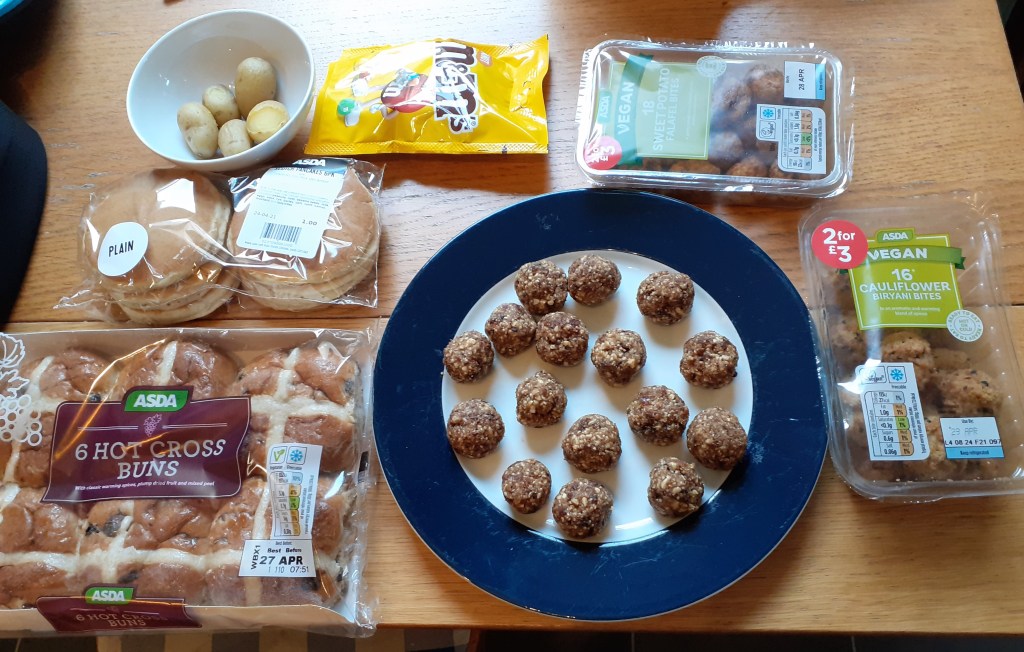
I’m taking a mix of sports nutrition (my favourite strawberry Shot Bloks and white chocolate and macadamia Clif Bars) and real food. My trusty new potatoes and pizza muffins have both been a hit in training, and the raw energy balls are a must – I’ll be leaving extras of these in the drop bag and with Chris. Plenty of water of course, and an extra bottle with a Zero electrolyte tablet dissolved in it. The biggest challenge is having enough of each. Forty miles is still such an unknown.

Knowing that there are check points with lots of goodies means I don’t need to carry the little extras of M&Ms or jelly babies, they can go in Chris’ bag along with the energy balls. He’ll be there with the boys, a little before half way, then my sister should be somewhere after mile 25. Knowing they’ll be there is almost as much of a boost as seeing them will be. All supporters make a huge difference, but nothing beats seeing your family cheering you on. Shoulders straighten, head comes back up, a waning smile becomes firmly fixed once again. That feeling can carry me for miles.

There’s nothing else I can do now. Training is done, lists are written, kit is out and ready. By the time I go to bed this evening my bag will be packed for the last time, the alarm set, clothes out ready to be pulled on. The only aims that really matters are to finish, and most of all, to enjoy it. I can’t wait!

Ultra Training for a Novice- The Business End

Just over five weeks to go now, and the training is starting to feel like hard graft at times. I suspect this is a good thing. Easy training certainly wouldn’t be good preparation for what is clearly going to be a hard race, so I feel fairly confident that the training is going well. That thought isn’t making it any easier.

Since I allowed myself to mentally commit to this race the thought of it has basically taken over my life, in so many more ways than I had expected. I knew that fitting in the training runs would become more time consuming as the date drew closer and the runs got longer, but in many ways that’s the small part. I find myself thinking about the race at all times of day and night, obsessing about food and fuelling, going over my kit and whether anything needs replacing, wondering what I’m going to wear on the day and what extras I’ll carry. I’m analysing my runs as never before in terms of route/distance, my pace and my calorie usage. And I’m constantly thinking about my injury and whether it’s healed enough for what I’m putting it through.

Many of these are little thoughts that flit in and out, but a few take some more serious thinking about. Whether to recce the route has been a question I’ve danced around for a few weeks, as with the race starting so close to home it is entirely possible to recce the whole thing before race day. There are obvious benefits to this: discovering and resolving any navigational issues in advance, knowing the terrain and how it changes, and being able to visualise myself on the route ahead if I’m flagging. These are benefits that may well prove vital in the latter stages of the race, when tiredness is creeping over and thought processes start to slow.

But what about the sense of adventure, of exploring somewhere new for the first time, and doing it entirely under my own steam? I accept that race conditions aren’t the ideal time for my favourite sort of exploring, the sort that involves getting stuck in at least one field, but if I’m going to run a trail race there needs to be an element of the unknown, surely?

So I’ve compromised. The final stretch is one I know well, I should have run most of the middle stretches at least once by race day, but the first eight miles will be entirely new. That feels like a fairly realistic balance. Unless the weather turns, of course. This cold but dry spring has made for ideal running conditions, but the whole route will feel very different if the wind and rain hit! These are hardly new conditions to run in, just slightly less practised than usual at the moment. Is it wrong to hope for a rainy, windy run sometime soon, just in case?

Experimenting -some options were more successful than others!

My biggest worry, as always, is fuelling. I’m still experimenting and have added pizza muffins and peanut m&ms to the raw energy balls and new potatoes I’d already discovered. I always have a stash of Shot Bloks too, just for a straight forward sugar hit, and I’m going to experiment with Tailwind this weekend as liquid calories could be a real bonus in the latter half. There is a very real chance I’ll stop to buy a Calippo somewhere en route too.

This is where my nerves are. I did a rough calculation and it looks as if I’m likely to use around 5000 calories on that run. I almost wish I hadn’t worked it out, it’s a dauntingly high number, and could far too easily become one to obsess over. Nevertheless, it helps to think about it, to plan some fuelling up before the race, not just during it, so that I have something extra in the tank if needed. I’ve also taken on board some advice from Lowri Morgan’s inspirational book ‘Beyond Limits’ – first fuel at 40 minutes, then every 20 minutes after that. Little and often should see me through.

With all this going on, is it still fun? After all, the only person making me do this is me, and there’d be very little point if I wasn’t enjoying it. The answer is a resounding yes. I’ve done some fantastic training runs, mostly with friends who are also training for the race, all bar one of us doing an ultra for the first time. The companionship and sense of community that training together has brought has been an absolute joy, and will only get more intense as the race gets closer, all our nerves kick in, and we keep each other’s spirits up to reach that starting line. Not long to go now.

Ultra Training for a Novice – there’s no going back now!

Lighthouse near Nash Point

Back in the autumn, feeling strong after all my lockdown running, I signed up for my first ultra marathon. The Vale of Glamorgan Ultra follows 40 miles of the Wales Coastal Path, from Porthcawl to Penarth, a beautiful route and, being local, one with no logistical issues to worry about. I had nine months to train, and lots of fellow novices as 12 people from my running group had also signed up. What could possibly go wrong?

Well, losing nearly three months of running to a stress fracture, followed by a very, very slow and gentle reintroduction to running wasn’t exactly ideal. Nine months of training turned into six, building up from just 1 flat mile instead of the 13 hilly ones I’d been doing pre injury. I’d be lying if I said there wasn’t a little voice that sometimes asked if this was really a sensible thing to do, but that little voice wasn’t so different to the small child repeatedly asking for ice cream, and I knew what to do with that. “We’ll see” isn’t really an answer, but it at least stops the questioning for a while.

I’ve never been one for formal training plans. There’s too much chance of life getting in the way, turning a plan into yet another source of anxiety rather than the aid it’s supposed to be. Instead, I went for small goals to tick off: managing a full 5 mile Bay loop; noticing when running started to actively help my leg feel better; running up a hill, and best of all, running back down one. None of this was ultra training, I still wasn’t mentally committing, but I was getting closer to it every time. Then at T minus three months I made it back into Penarth. Mentally that was huge, I’d got myself out of Cardiff and was starting to get some real distance in my legs. Time to accept that I really was going for this, and with that acceptance surely some element of planning would be sensible.

To my way of thinking, training of any sort breaks down into two areas: how do I get my body to achieve what I need it to do, and how do I fuel it so as to reach that goal safely? In other words, output and input.

Output

My structure has been deliberately simple: three runs a week, one of them long, and getting steadily longer as the weeks go on. It hasn’t been entirely linear – my half marathon with a friend accidentally became 14.5 miles, so I dropped back down to 12 after that – but while the distance line on the graph might be bumpy it’s definitely heading in the right direction.

But there’s more to it than simply increasing distance, I also need to look at how I run. There is no chance that I’m going to run every step for 40 miles of coastal path, so the training needs to mirror that. I need to learn how to stop and still be able to start again, how to notice when 60 seconds of power walking will refresh me rather than pushing through to keep running and risk not being able to finish. I’m learning how to spot that tiredness, thirst or hunger is going to hit, and making adjustments before it happens so that I can keep going.

Keeping going is an awful lot easier than picking yourself back up again, but I suspect I’ll need to do that too, and this one really is a head game. I find myself thinking back to my days before running, before children, and long, hard days out in the mountains. I have no doubt that this race will do just the same as some of my hardest climbs, stripping back all the layers we build over ourselves, all our protections and safety measures, until only the rawest version of our self is left. There is no hiding then, nowhere to go other than to get to the end. That exposure, that we spend so much our lives avoiding, is overwhelming when it comes. But it’s exhilarating too. I’ll know then that I’ve hit my hardest point, that it can’t get worse, that by simply putting one foot in front of the other I can keep going, and I will finish.

Input

Of course, none of that works unless our bodies have been fuelled properly, and after my brush with REDs (Relative Energy Deficiency in sport) I’m not taking any chances. I’m experimenting with different foods during a run (current favourites are Anita Bean’s raw energy balls, and cold new potatoes), and I’m making sure I eat before I get hungry, to ensure my energy levels don’t dip too much.

I’m also taking notice of the ‘calories’ stat on Strava. It’s simple common sense that the longer the run the more calories we burn, but seeing that figure written down has made me sit up and really appreciate it. My standard Bay loop can add the equivalent of a whole extra lunch to my calorific needs for the day; the 16 miles I ran yesterday almost doubled my daily need. These are not insignificant amounts of food, but it takes thinking about to properly replenish those stores, both before and after a run, and it gets harder as the distance increases.

Final steps

With a little over 8 weeks to go I’m finally allowing myself to think seriously about this race that has been on my mind for so long. I even got as far as planning weekly distances for the remaining training time, but I think that was really only to make me feel a bit better about it as I haven’t stuck to it yet! But the basics are working: my distances are growing, I’m fuelling well, and above all else I’m enjoying the training. That seems like the right place to be.

Running Safely

There is a sense in which every decision we make about our running comes back to safety: kit that looks after our bodies; routes that we feel confident to complete; pacing and fuelling to avoid injury; choosing times of day and running partners that make us feel secure. The area we focus on might change given our circumstances at the time, but it boils down to the same basic question – what do I need to do to enjoy my run and stay safe?

Foremost in my mind at the moment is injury prevention. I’m still very much in the recovery phase having injured my leg in the autumn, which means that all my routes have to be carefully chosen to steadily increase strength and fitness without overly stressing my leg and sending me backwards again (I’ve come close to that once, and once was enough). Warming up, cooling down and stretching are more important than ever, habits which I hope will stay with me and set me in good stead for the future.

My other new habit is fuelling fully, and thinking about what I eat before and after a run. I’ve realised that as my runs get longer again the amount of calories I need is significantly higher than I was consuming pre-injury. Having learnt the hard way that lack of proper fuelling is a huge safety concern in its own right, I’m monitoring myself much more closely now to make sure there is no repeat of that mistake.

So these are my basics at the moment, with a very clear focus on injury recovery and prevention. Next on my list are kit choices and decisions about when I run. Kit feels like the easy one: is it raining or not? how cold is it? I know that this will become more of an issue as my runs get longer again and I start taking my pack back out, so for the moment I’m just going to enjoy the ease of it!

Timing of a run is when it starts to get more complicated. There are a fair number of personal decisions here based around how my body functions at different times of day and how long I need to leave it between eating and running, but there is also a great deal that is out of my control. Family life, especially now in lockdown, is a significant part of this, but one that frustrates me is the short sunlight hours through the winter. I don’t think of myself as a nervous runner, but I am not at all comfortable running in the dark on my own in the city. Being unable to run with others through the darkest time of the year had an enormous impact on when I could fit in my runs, leaving me asking some very serious questions about how I address the final aspect of safety considerations, and one which is entirely outside my control – other people, and the risk they can pose.

In terms of running in the dark, there are of course some simple things I can do to keep myself safe, such as high-vis clothing, reflective strips, a headtorch. Kit that keeps me visible helps reduce the risk of avoidable accidents with cyclists, drivers or other runners and pedestrians. But this isn’t really what I’m scared of. The fear that lurks in the back of my mind is of the bogeyman used to frighten all women across the centuries, the unknown stranger who leaps out of the dark and attacks. I have no direct experience that should stoke that fear, but you don’t have to look hard to find stories of people who think it’s acceptable to shout harassment or abuse as they pass; the (thankfully rare) reports of runners physically abused while they are out exercising; the stories of men exposing themselves in secluded spots. These events are not confined to the night time, and so the spectre of them haunts every solo run.

We live in the world as it is, not as we wish it to be. As with so much in life, running safely becomes a balancing act with sensible caution on one side and refusal to give up my freedom on the other. That balance is different for each of us, as we weigh the risks and rewards of our running choices. I can avoid certain paths that make me nervous, I can be alert at points that I think might be less secure than others, but I cannot ever ensure that a route is 100% risk free. Yet by finding my own balancing point I can keep myself getting out there. Alert and conscious of risks of any sort, but not overwhelmed and scared. That balancing point changes with time, it needs constant reflection and adaptation. It needs work. But all the best things in life need tending and looking after. Running safely is very definitely worth the work.

Rediscovering my winter kit

Snowy Cardiff

It snowed on my run this morning. Not seriously to start with, just the odd white flake blown past on a bitter wind. A mile or so in the flakes vanished, replaced by tiny pellets of ice needling my cheeks and eyelids, until they too were replaced by proper snow. Big, beautiful flakes whirling around me as I ran, turning a cold, grey run into something unexpectedly magical.

There is so much joy to be found running in different weather conditions, but only when we’re properly prepared. I think I got it right this morning – warm running tights, two long sleeved base layers, a light windproof jacket, windstopper gloves, and two buffs, one round my neck and one for ears and head. I started off cold, and wondered if I’d under dressed, but a mile in I was warming up nicely and was toasty by the time I finished. Truth be told, I was probably over dressed. I certainly would have been if I’d run for much longer, but for the short I run I had in mind I was just about right.

My well worn OMM Kamleika and two buffs.

Winter makes for a hard balancing act – enough layers to keep warm and dry, but not so much as to overheat. In many ways it was the little things that were crucial today: my gloves have windstopper fabric on the outer face only, so my hands were protected but not too hot, while the two buffs kept my upper chest, ears and head warm and meant I had very little bare skin to get chilled by the wind. These are the last minute bits that are easy to forget when rushing to squeeze a run into a busy day, but without them I might well have come home cold and miserable.

As it was, being comfortable while I ran meant I could think of other things, and inevitably my mind wandered to the longer runs I’m still not able to do yet. They feel like they’re in touching distance now, so instead of just wistfully rerunning them in my mind, I find myself starting to plan. There’s something so exciting about coming home and getting my running packs out, checking them over. They haven’t seen much use since my injury back in September, but I’m not too far off needing them again.

Raidlight Responsiv 12L on a summer outing.

I suspect they’ll come out at shorter distances than they might have done in the past too. Having being rather doubtful before I tried one out, I am now fully converted. I’ve got used to the convenience of it: space to stash some extra layers, knowing if I get too hot I don’t have to run with a jacket flapping annoyingly around my waist, and having snacks and water accessible as I try to get my body more used to eating and drinking while I run. It took a bit of fiddling about in the early days to get a set up I was happy with, not least with the bottle pockets on the front of the pack. It turns out that even soft bottles are surprisingly hard when full of water, which I found extremely uncomfortable pushing against my chest, so swapping to a bladder in the main pocket at the back and using the bottle pockets for gloves, buffs and so on has worked a treat.

I’ve been checking out my waterproof too, making sure the seams are still in place and seeing whether it needs a reproof next time I wash it. This time now, when the long runs are close but not quite there, this is the chance to get my preparations right, check that my kit is fully functioning and do any repairs or adjustments. Long winter runs are surely just around the corner now, they’re so close, and I need to know I can rely on my kit when I get there.

Fuelling – Or what happens when you don’t.

In very simple terms, running requires energy and energy means food. So in order to run we need to eat. Sounds so easy, right?

Well, no, as it turns out. Eating enough is not as easy as it sounds, and the consequences of not doing so can be serious.

Lack of fuel first raised its head properly when I was training for Marathon Eryri. I was ready to do my first 20 mile run, and had a plan to run with a friend who was also doing the marathon, but after a catalogue of disasters at home that morning I set off at 11am with nothing like enough food inside me. I started to run out of energy as we got past 13 mile, and by mile 19 I just had to stop and walk a short cut home. Within five minutes of getting home I was in bed, very cold, blue lipped, and feeling very, very wrong. My very worried husband slowly coaxed tea and half a bacon sandwich into me. Eventually I had enough energy to sit up properly and eat, after which I picked up fairly quickly, but it took days to get back to normal, and unsurprisingly I got hit by a nasty cold a few days after this.

I was very lucky. There was enough time to recover from having broken myself and from the cold, and still do the marathon, which was brilliant. But there were some serious lessons to be learnt there about fuelling enough, both before and during a run. Lessons I took on board, taking plenty of water, shot bloks and other snacks with me on every long run after that. I even ran the marathon with a flapjack in my pocket!

This really should have been an end to it, I’d learnt my lesson and was looking after myself properly now. Occasionally Chris would comment that perhaps I should eat a little more after a long run, so I did, but generally I was doing ok. My long runs were getting steadily longer as lockdown progressed, getting back towards my marathon training levels, but easier and more relaxed. I was just enjoying it, and enjoying what my body seemed able to do. Then in September, nearly a year after the first time, I broke myself again. A niggle in my shin turned into a sudden sharp pain that stopped me in tracks. No quick improvement, so off to Pete the physio to sort me out. But it didn’t quite turn out like that.

We tried some rest and gentle exercises, but as it became apparent that this was something more serious Pete started talking to me about fuelling, and Relative Energy Deficiency in sport (REDs). I hadn’t even heard of it, but I started to read around and discovered that, as runners, we really need to know about this. Put simply, if our calorific intake is insufficient for our activity levels the body starts to get the energy it needs from elsewhere, potentially altering systems such as metabolism, menstrual function, bone health and immunity, among others. What makes it particularly insidious is that our running can get stronger as the body gets lighter and finds new energy reserves to use up, but none of this is sustainable. As those secondary reserves start to run low, the body becomes susceptible to stress fractures or infections and everything comes to an abrupt stop.

I’ll never know for certain whether I’ve actually had REDs, but I do know that I’ve hovered perilously close to it. The pain in my shin was never fully diagnosed, but after everything else was ruled out both my physio and GP concluded that it was a suspected stress fracture. Four months later I’m running again, but very slowly and carefully, sticking to flat, even routes that are far from the hilly trails and mountains that are my first love. And I’m so angry with myself for having landed myself in this position.

Looking back on my last few proper runs before it all went wrong, I cannot believe how badly I was looking after myself. Surely anyone can see that a 14 mile run requires more than just a normal breakfast before and standard lunch after? Surely sense says that the more we exercise, the more we eat? After all, when did you last meet a runner who didn’t look forward to cake after a long run?

Well, no, I couldn’t see it. And that is the biggest problem of all. Recreational runners are one of the highest at risk group for involuntary REDs (voluntary REDs, where athletes deliberately restrict their calorific intake is a whole other story). We don’t have coaches or dieticians to keep an eye on us, and inevitably life is hectic so we squeeze the run in, and then come home and get on with everything else that needs to be done. By the time the next meal comes along are we really thinking about how many extra calories we should be taking on board, or have we slipped back into the usual routine and forgotten that our body has worked harder than usual today? I did the latter, again and again and again, until I no longer had any thought that a long run needed special fuelling. After all, if I was chatting and enjoying it all the way round, it wasn’t really hard work, was it?

This is the lesson I am so desperate to pass on to other runners so that they can avoid this horrible, and entirely avoidable issue. As the miles slowly creep up through training, the food consumption needs to creep up too. It doesn’t need to be overly scientific, we don’t need to log every calorie, but we need to firmly embed the idea that energy output requires energy input. Running on fumes will only get us so far.

Stopping now to think about everything I’ve learnt over the last few months I realise that there is a remarkably positive spin to be put on this. Through the simple act of eating a little more as my recovery continues, and more again as the miles creep up, I have every expectation of not just completing my recovery but of being a stronger runner than I’ve every been. After all, if I’m no longer running on fumes, my running future suddenly feels exciting again. And best of all, it feels like the future might be long. That’s got to be worth a little extra thought about food.

Some useful links for more reading/listening about REDs