Lessons Learnt

A week ago today I finally ran my first ultra. All those months of training and planning came together in one glorious day of running. My abiding memories are good ones: perfect weather; a stunning course; running so much of it with my training partner, Emma, and family and friends out supporting along the route. And I finished, which was, after all, the only aim for the day that really mattered.

Sadly, in amongst all the pride and the happy memories, there is a significant chunk of disappointment and frustration, aimed entirely at myself. I got my fuelling very, very wrong.
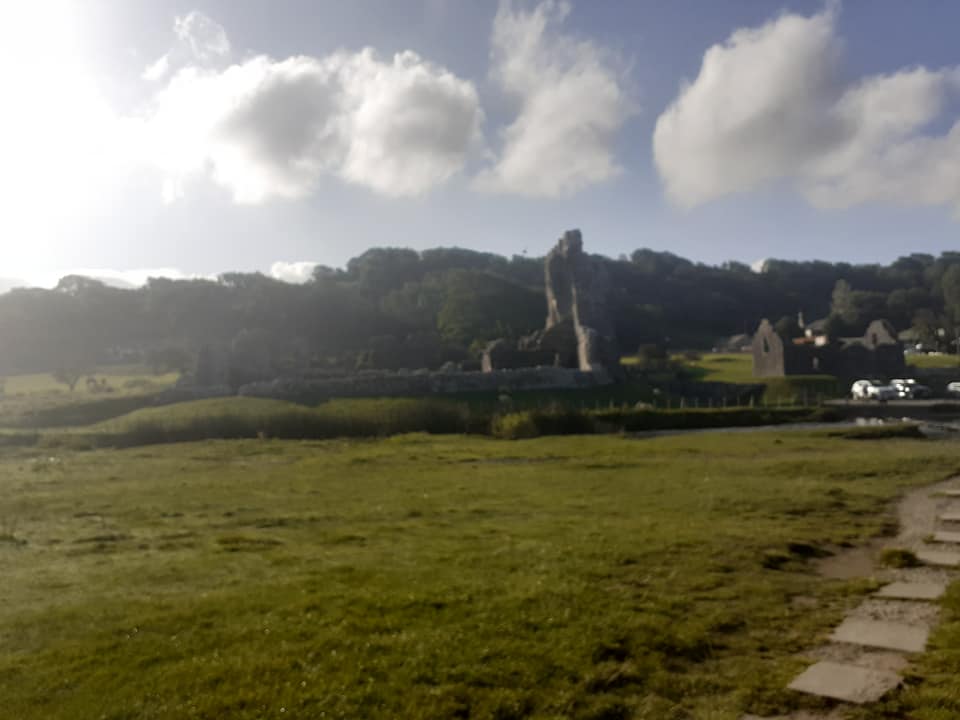
Ogmore Castle

The frustration is that I knew how to do it. I’d practised it again and again, talked about it endlessly, honed it down to exactly what worked for me. And on the day it really mattered, I stopped listening to myself. That error cost me at least an hour in running time, and gave me (and others) moments of real concern about my health, and my likelihood of finishing. So what actually went wrong?

Problems started before I’d even arrived at registration. The one thing I hadn’t practised was having breakfast at 4:45 a.m., and forgetting my second breakfast that I was going to eat in the car was a big mistake. Through no fault of anyone, the race was over 40 minutes late starting, time in which I should have eaten something but a voice in my brain said ‘don’t eat just before you run’. Hours later I remembered that, whilst having a snack mid run. Whatever voice it was, it was clearly not the voice of reason.

All of which meant that by the time we started running I hadn’t eaten for three hours. Not ideal, but rescuable if I stuck to my fuelling schedule from then on in: first snack at 40-50 minutes, then every half hour after that. It had worked on all my long runs, and no doubt would have worked during the race too. I just didn’t stick to it.

I can find reasons for this: we got out of the sand and were able to run properly just as I should have had the first snack; I got too focused on checkpoints, which weren’t necessarily at the right place in my personal schedule. But what it really boils down to is that most basic of beginner errors – I got swept up in the excitement of the race.

There were plenty of opportunities to get back on track. My husband had a bottle of Tailwind ready for me at 14 miles, something I usually dislike and sip slowly. I downed it in one go, and inhaled a chicken wrap. My body was clearly telling me something. As the day went on, what I thought it was telling me was ‘eat fruit’, so at every available opportunity that’s what I did (my sister’s melon box when I saw her, checkpoints, and a lovely family at Aberthaw who were handing out orange segments). What my body was actually telling me was that, behind the lovely sea breeze, the day had got really hot and that I needed to make adjustments for that (a hat might have saved my sunburnt nose!). Fruit is wonderfully refreshing, but I needed far more calories than it could ever provide, and I’d lost the ability to hear those signals.

By the time I hit the final checkpoint in Barry Docks I knew I was in trouble. I’d managed to stave off cramp in my shin with my last salt tablet, but the crisps I picked up off the table were a struggle to eat. More fruit from one of our wonderful Run Grangetown gang, Colette, tasted wonderful, and at least gave me a little sugar hit if nothing else. Our little group of three runners had started to separate as we went through Barry, coming back together at the checkpoint, but I had to get going again before the others were ready as I knew I was in real danger of not finishing if I stopped for too long.

Those last eight miles were, without a doubt, the toughest of my life. I forced myself to run/walk as I made my way out of Barry and down towards the coast again, keeping it going for another three miles before I finally lost the ability to run. The relief when I saw my sister at mile 36 was incredible, and she walked with me for the next few miles, trying to get some food in me, none of which I could even swallow. I was so close now, and with Nick having joined us she left us to it for the final mile and half, hightailing it off to the finish line. We barely spoke, I’d given up on any idea of trying to eat, all that mattered now was getting to the end. After that, everything would be ok.

As we turned the final corner we were greeted by Chris and Tom, giving the boost I needed to somehow find the energy to run the very last section along the path in Penarth to the finish line. I saw my other Run Grangetown runners, who’d all done such an amazing job; I saw a friend I hadn’t seen for such a long time, who’d come out to see me finish; and I saw my family, waiting for me with smiles on their faces. I’d done it.

Looking back now, I was worryingly close to breaking myself rather seriously. A combination of errors, all of which should have been avoided, left me scaring myself and others in a way that should never have happened. These are lessons that I need to carry with me, and ensure that I never make those mistakes again. But hiding beneath the frustration and the disappointment is a little nugget of pride. I got it very wrong, and I still finished less than an hour outside my target time. Just imagine what I could do if I got it right.

There’s only one way to find out. Looks like I’ll have to do it again.

VOGUM Eve

Tomorrow, for the first time, I’ll be running 40 miles. The Vale of Glamorgan Ultra Marathon is a beautiful course, much of which I know already, but stitching it together is another matter entirely. I think I’m ready, I’ve hit all my training goals, but I won’t know for sure until I see that finish line tomorrow afternoon.

This final day is all about food, and lists. I have five lists going at the moment: what to wear; what to carry; food; drop bag, and extras for Chris to carry. Proper lists, on a scrap of paper, that stays close today as I add to it and cross things out. I’m not sure where nervous excitement fits on those lists, is it something I wear or something I carry? Probably both.

What to wear is the easiest one. The weather forecast is good, so I’ll be in a top and skort (and calf guards). Footwear is a little more of a question. I’ll be starting, and doing most of it, in my La Sportiva Bushido IIs, the best running shoes I’ve ever owned and ones which feel incredibly stable on rough ground, which is exactly what this race needs. The question is whether to change them for road shoes later on, and if so, when. There’s a road section of a few miles starting at about mile 30, and my tired feet might appreciate some more bounce by then. But it’s only a few miles.

I suspect that this is a decision to be made on the day, so road shoes can go in the drop bag, along with spare socks for my trail shoes, a fresh running top and headband, and some extra electrolytes and energy balls. And suncream. This drop bag might turn into an overnight bag if I’m not careful.

This race is my first experience of a mandatory kit list, and as I pack it all in my bag (and take it out, and pack it again . . .) I’m really starting to appreciate the importance of lightweight running kit. My waterproofs (OMM Kamleika jacket and Marmot trousers) take up remarkably little space, my warm Outdoor Research base layer squashes up nicely, and even my Buff sun cap can be squeezed into a tiny space as the peak isn’t solid. Which gives me plenty of space for lots of food.

I’m taking a mix of sports nutrition (my favourite strawberry Shot Bloks and white chocolate and macadamia Clif Bars) and real food. My trusty new potatoes and pizza muffins have both been a hit in training, and the raw energy balls are a must – I’ll be leaving extras of these in the drop bag and with Chris. Plenty of water of course, and an extra bottle with a Zero electrolyte tablet dissolved in it. The biggest challenge is having enough of each. Forty miles is still such an unknown.

Knowing that there are check points with lots of goodies means I don’t need to carry the little extras of M&Ms or jelly babies, they can go in Chris’ bag along with the energy balls. He’ll be there with the boys, a little before half way, then my sister should be somewhere after mile 25. Knowing they’ll be there is almost as much of a boost as seeing them will be. All supporters make a huge difference, but nothing beats seeing your family cheering you on. Shoulders straighten, head comes back up, a waning smile becomes firmly fixed once again. That feeling can carry me for miles.

There’s nothing else I can do now. Training is done, lists are written, kit is out and ready. By the time I go to bed this evening my bag will be packed for the last time, the alarm set, clothes out ready to be pulled on. The only aims that really matters are to finish, and most of all, to enjoy it. I can’t wait!

Postponed

I had convinced myself that this was one blog post I wouldn’t need to write. Somehow, the race I’d signed up for would find a way to still take place, and everything could go ahead as planned. Sadly, I got that very wrong.

Last Friday evening, two weeks and a day before the race, we finally heard that they had had to postpone until August. It must have been an immensely difficult decision to make, at such a late stage, when the organisers had clearly been feeling confident that they could find a way to go ahead. That thought has stopped me from feeling any anger about the decision, but it doesn’t change the fact that I am, quite simply, gutted.

Six days earlier my friend and I had done our last long run: 21 miles looping up the Taff to Castell Coch and back down again. We explored new trails, stopped to wonder at the noise and number of birds in the heronry, enjoyed the peace and tranquillity of the old canal, and arrived home tired, happy, and confident that we were as ready as we could be for our first ultra. We had, we hoped, timed it well, to have three weeks of gentle tapering leaving us full of energy come race day.

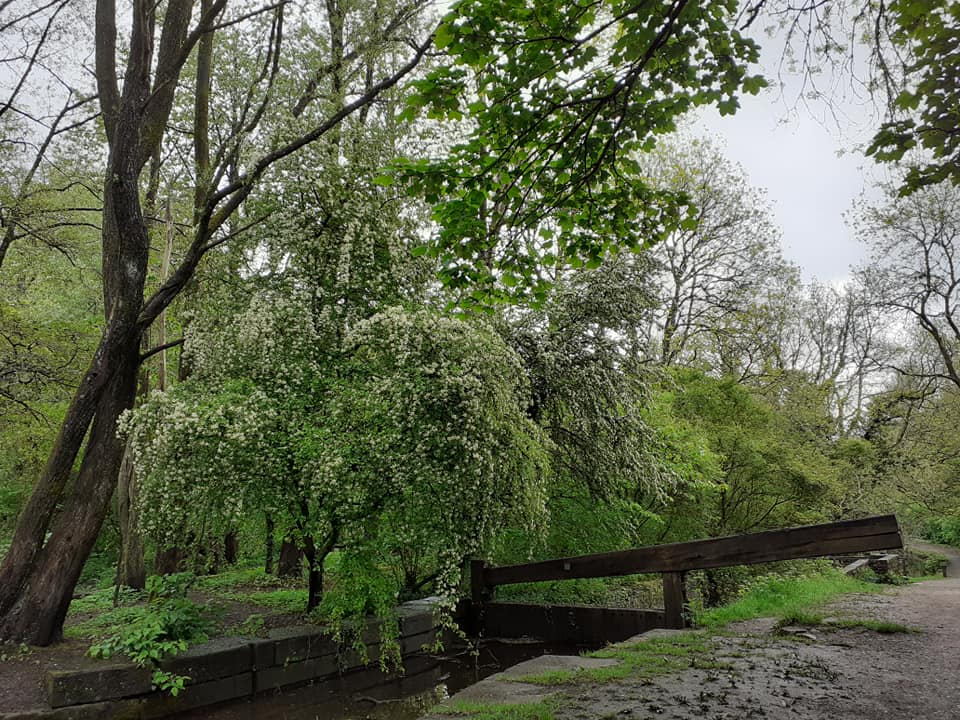
Peace and quiet by the canal

That energy has gone. Vanished entirely within hours of receiving the news. Suddenly, just getting through the day is challenge enough, and the thought of adding in a run becomes overwhelming. I’ve managed two short ones, both of which felt much harder than Strava would have me believe. Today, I have just stopped entirely.

There is, if I’m forced to admit it, more to life than running. We’re approaching the half term holiday, at the end of seven long weeks where both schools have managed to avoid any isolation periods. That takes its toll too. But it was the thought of the race that was keeping me going, giving me a reason to get my shoes on and get out there, and I came back refreshed every time. Getting through this final week of term without that incentive has been harder than I had ever expected.

I have spent years telling people that I run entirely for my sanity, something that I still believe to be true. But it’s not the whole truth. In this time of such uncertainty, when life has felt so aimless, the focus of a challenge has been more valuable that I had realised. It gave me a goal as I came back from injury, something to aim for when plans in all other areas of life seemed almost impossible to contemplate. And it gave me hope. Hope that I would be able to run the distance; hope that the normality of a race would come back to us all.

That hope is not entirely gone. The race has a new date, and I have every intention of being there. It’s far enough away that I have time to stop a little, then pick myself back up and get back out, rediscover the joy and the excitement, and get training. But that is in the future. For today, I’m going to be kind to myself. The sun is shining. The garden, my book and a cup of tea are calling. Though I might just check out some races while the kettle boils. It can’t hurt to have a few ideas to mull over, now that I know quite how valuable that goal can be.

Ultra Training for a Novice – there’s no going back now!

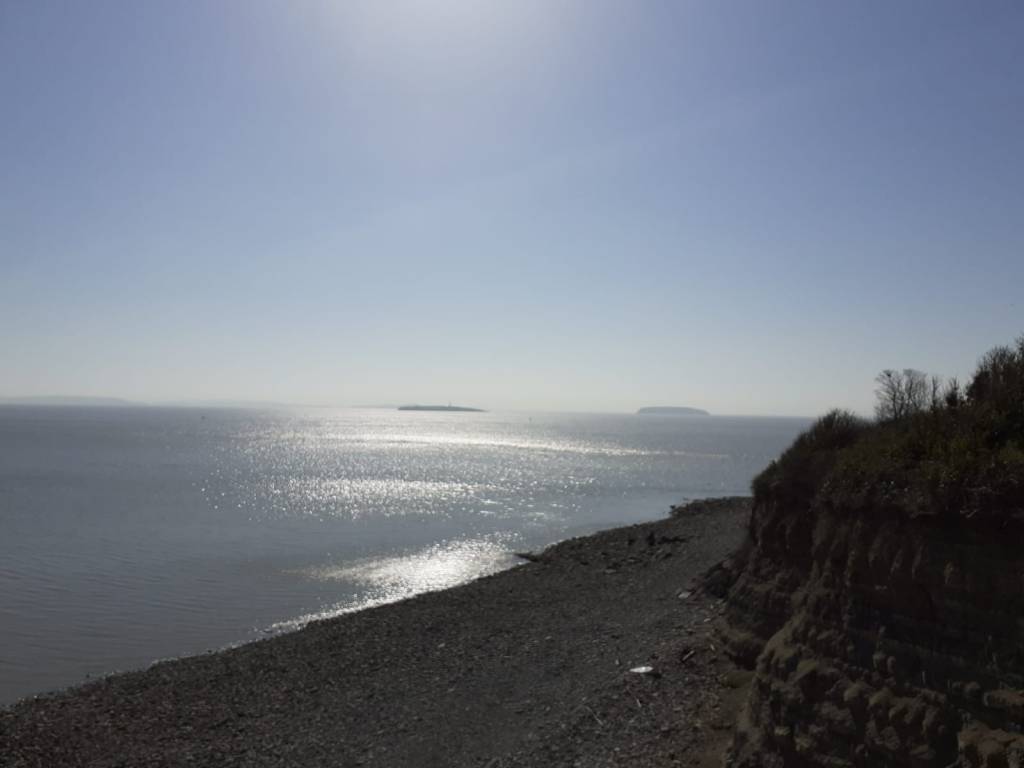
Lighthouse near Nash Point

Back in the autumn, feeling strong after all my lockdown running, I signed up for my first ultra marathon. The Vale of Glamorgan Ultra follows 40 miles of the Wales Coastal Path, from Porthcawl to Penarth, a beautiful route and, being local, one with no logistical issues to worry about. I had nine months to train, and lots of fellow novices as 12 people from my running group had also signed up. What could possibly go wrong?

Well, losing nearly three months of running to a stress fracture, followed by a very, very slow and gentle reintroduction to running wasn’t exactly ideal. Nine months of training turned into six, building up from just 1 flat mile instead of the 13 hilly ones I’d been doing pre injury. I’d be lying if I said there wasn’t a little voice that sometimes asked if this was really a sensible thing to do, but that little voice wasn’t so different to the small child repeatedly asking for ice cream, and I knew what to do with that. “We’ll see” isn’t really an answer, but it at least stops the questioning for a while.

I’ve never been one for formal training plans. There’s too much chance of life getting in the way, turning a plan into yet another source of anxiety rather than the aid it’s supposed to be. Instead, I went for small goals to tick off: managing a full 5 mile Bay loop; noticing when running started to actively help my leg feel better; running up a hill, and best of all, running back down one. None of this was ultra training, I still wasn’t mentally committing, but I was getting closer to it every time. Then at T minus three months I made it back into Penarth. Mentally that was huge, I’d got myself out of Cardiff and was starting to get some real distance in my legs. Time to accept that I really was going for this, and with that acceptance surely some element of planning would be sensible.

To my way of thinking, training of any sort breaks down into two areas: how do I get my body to achieve what I need it to do, and how do I fuel it so as to reach that goal safely? In other words, output and input.

Output

My structure has been deliberately simple: three runs a week, one of them long, and getting steadily longer as the weeks go on. It hasn’t been entirely linear – my half marathon with a friend accidentally became 14.5 miles, so I dropped back down to 12 after that – but while the distance line on the graph might be bumpy it’s definitely heading in the right direction.

But there’s more to it than simply increasing distance, I also need to look at how I run. There is no chance that I’m going to run every step for 40 miles of coastal path, so the training needs to mirror that. I need to learn how to stop and still be able to start again, how to notice when 60 seconds of power walking will refresh me rather than pushing through to keep running and risk not being able to finish. I’m learning how to spot that tiredness, thirst or hunger is going to hit, and making adjustments before it happens so that I can keep going.

Keeping going is an awful lot easier than picking yourself back up again, but I suspect I’ll need to do that too, and this one really is a head game. I find myself thinking back to my days before running, before children, and long, hard days out in the mountains. I have no doubt that this race will do just the same as some of my hardest climbs, stripping back all the layers we build over ourselves, all our protections and safety measures, until only the rawest version of our self is left. There is no hiding then, nowhere to go other than to get to the end. That exposure, that we spend so much our lives avoiding, is overwhelming when it comes. But it’s exhilarating too. I’ll know then that I’ve hit my hardest point, that it can’t get worse, that by simply putting one foot in front of the other I can keep going, and I will finish.

Input

Of course, none of that works unless our bodies have been fuelled properly, and after my brush with REDs (Relative Energy Deficiency in sport) I’m not taking any chances. I’m experimenting with different foods during a run (current favourites are Anita Bean’s raw energy balls, and cold new potatoes), and I’m making sure I eat before I get hungry, to ensure my energy levels don’t dip too much.

I’m also taking notice of the ‘calories’ stat on Strava. It’s simple common sense that the longer the run the more calories we burn, but seeing that figure written down has made me sit up and really appreciate it. My standard Bay loop can add the equivalent of a whole extra lunch to my calorific needs for the day; the 16 miles I ran yesterday almost doubled my daily need. These are not insignificant amounts of food, but it takes thinking about to properly replenish those stores, both before and after a run, and it gets harder as the distance increases.

Final steps

With a little over 8 weeks to go I’m finally allowing myself to think seriously about this race that has been on my mind for so long. I even got as far as planning weekly distances for the remaining training time, but I think that was really only to make me feel a bit better about it as I haven’t stuck to it yet! But the basics are working: my distances are growing, I’m fuelling well, and above all else I’m enjoying the training. That seems like the right place to be.

Girls on Hills weekend

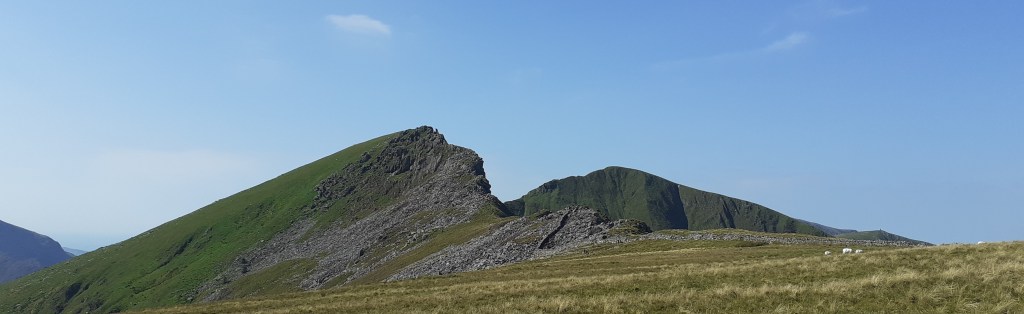
The ridge up to Mynydd Drws-y-coed

It’s December. The weather is horrible – wet and windy but still rather too mild – and my runs are still recovery runs: short, slow and flat. It becomes hard to imagine a time when runs were anything other than this, so I’ve been taking my mind off December by reminiscing about one of my highlights of 2020 – a trail running weekend in Eryri with Girls on Hills.

Map reading

Back in January I’d been feeling very low and needed something to look forward to that was just for me. Obviously it had to be running related, but I didn’t want the pressure of a race this time. I was looking for the chance to get into my happiest places, the high mountains, in as relaxed a fashion as possible. It turns out there’s a remarkable number of people and organisations offering guided trail and mountain running holidays, but the one that suited me best in terms of dates and location was Girls on Hills. They’re a Glencoe based company focusing on women in the hills, but using local guides they also offered a weekend in Eryri (Snowdonia), which was exactly what I wanted.

Llyn Padarn in Llanberis as we started out.

We met on a cloudless Saturday morning in Llanberis, four runners with a guide (Jade) and a trainee guide (Kat). I’m sure there should have been more of us, pre-Covid drop outs, but the ratio was wonderful for the clients (although less so for the business in this most difficult of years). Jade led us out of Llanberis straight up the track on to Moel Eilio, a fairly steep start to the day, but one that set us up for a fantastic run along the tops to Moel Cynghorion, than back to the Snowdon Ranger path and over the bwlch down to Llanberis. As we ran we chatted and swapped stories and experiences, running and otherwise. We talked trail vs road, how to route plan and keep safe, some techniques. Most of all we talked about confidence, how to get it and keep it, why it matters, and why it’s such a struggle for so many to find it.

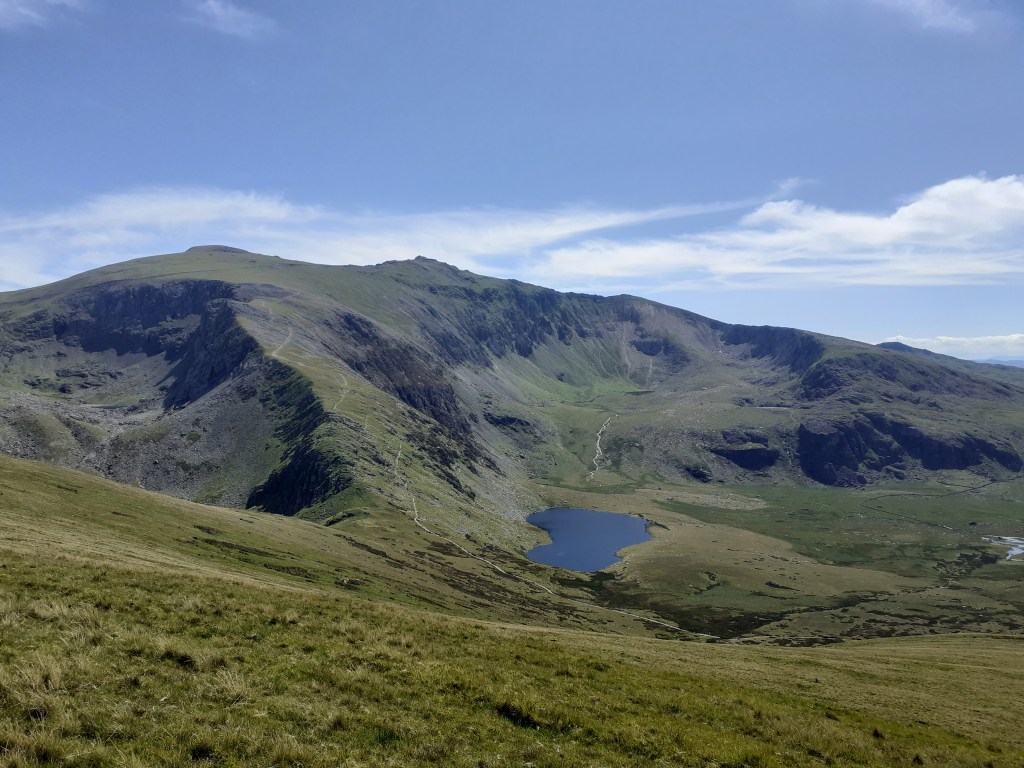
Yr Wyddfa

It would have been nigh on impossible not to feel a surge of confidence running in such spectacular surroundings, with Jade and Kat encouraging us at every step. No one was left behind or held back as we ran, with regular breaks to look at the view, take photos, breath the amazing, clean air and feel renewed by it. This, to me, is exactly what trail running is all about: no pressure, just the opportunity to get into and explore some stunningly beautiful places.

Heading into the forest (photo by Jade)

We arrived back in Llanberis tired but exhilarated, bouyed up by some stunning ice cream from Georgio’s and a paddle in the lake to ease our aching feet. And easing them was crucial because the next day was all set to be even better. We’d decided to meet a little earlier as this time we were starting at the Rhyd Ddu train station to head up Y Garn and onto the Nantlle Ridge. Y Garn seems to rise straight up from the banks of Llyn y Gader so it was quite a slog up to the top, but once there we could see the rest of our route for the day, and what a route. A scramble up the ridge to Mynydd Drws-y-coed and along to Trum y Ddysgyl, a beautiful grassy slope leading to a detour to the obelisk on Mynydd Tal-y-mignedd, then down through the edges of Beddgelert Forest back to Llyn-y-Gader and the finish. Back in a previous life (before children) my favourite of all sports was scrambling, so my ultimate aim these days is sky running, and here, for the first time, I got a taste of it. Warm, grippy rock beneath my hands, the sun on my back, the smell of the mountains, my feet moving quickly over exciting terrain. This is my element, and I was totally, supremely happy.

Scrambling! (Photo by Kat)

Confidence comes from experience above all else, holding onto the memories of things we’ve achieved and knowing that we can do it again. My body remembered how to move over the rock and my mind followed, careful but not nervous, knowing that I could do this and that there is no reason not to do it again. And again. At any available opportunity.

I couldn’t possibly have asked for a better weekend. Jade and Kat opened doors I hadn’t realised I’d closed, with gentle encouragement and an absolute belief that we would finish what we’d started. Nearly six months on, I’m still smiling as I think back on it, holding on to that belief in myself and the knowledge that this injury will pass and I’ll be back out in those mountains, putting my newly remembered skills back in action.

Why Race?

There seems to be a fairly set pattern for a runner’s first proper race, whatever the distance: book it in advance; plan your training; talk about it to psych yourself up; learn to cope with nerves; read through the registration instructions dozens of times, and don’t get injured!

This was very much my plan when I managed to get a place in the Marathon Eryri (Snowdonia Marathon) for October 2019. There was something undeniably awesome about contemplating this iconic marathon as my first ever race, but common sense kicked in fairly quickly, and I joined some of my running mates signing up for the Brecon to Merthyr Roman Road Race. This 16 mile race follows the old Roman road through the Brecon Beacons with a significant amount of elevation along the way, and takes place some 7-8 weeks before Eryri, making it an ideal warm up. So this would be my first race instead, and an excellent training race for the marathon.

Or not.

We’d decided to spend May half term just outside the Lake District, where the weather seemed to have got stuck in February that year. After a particularly cold, wet and windy day in the fells we headed back to the house for an evening of pie and mash, with a nice, warm fire to dry us out. But as we drove back into the village we spotted a sign that hadn’t been there in the morning – ‘Caution, Runners, 7-8pm’. A race?

A quick investigation revealed that this was the annual Levens 10k, and shortly before 7pm, with a belly full of pie, I found myself on the start line. No time to think about it, no friends to run with, no specific training. And the weather was horrible. This really hadn’t been the plan.

Blurred by the rain in my first race.

Maybe that’s why it was, in fact, perfect. It was a great route for me, down onto the plain for a very flat first three miles, then steeply up the hillside to run back through the beautiful Brigsteer woods. No trails, just narrow roads and wonderful views. With no preconceived plans or anxieties, without really even knowing the route, I just ran, and out came something I had thought long gone: my competitive spirit. I got pulled along by the crowd as we crossed the start line, starting much faster than I should have done. Then came the frustration at being overtaken, followed, in time, by the satisfaction of slowly overtaking people myself. Some of them I leapfrogged with for a while, but some I stayed past, and I discovered for the first time quite how energising that can be.

This wasn’t a run that needed to be a race – no need for road closures, limited marshals – which were precisely the races I’d always questioned. Why pay to run somewhere I could run anytime? Now I had an answer. A race is an event in every sense of the word, there are organisers and volunteers encouraging everyone to do their best, supporters who cheer on all the runners, not just those they know, and to top it all, a fantastic sense of being a part of something bigger, achieving just by being involved. This little, local race on a soggy May evening had opened my eyes to a whole new world.