September has marked the start of a new year for as long as I can remember, far longer than the 1st of January new year that passed me by as a small child. New school years led on to new university years, my October birthday on the horizon to mark another year gone. There must have been a period where this month mattered less, post-PhD and before my eldest child started pre-school nursery, but they were short years and feel very distant now. After the long, unstructured weeks of summer, September is a chance to try and regain some routine. And for me, that means trying to find an achievable training pattern.
Routine is hard to come by in our house. My husband’s work pattern changes every week, and with school hours being complicated for both children, establishing a detailed, fixed routine is nigh on impossible. I know from experience that I can become overly fixated on having to do certain things at the ‘right’ time, which leads me very easily to frustration and feelings of failure when, inevitably, life has other ideas.
None of this is new, and I have tried a number of different solutions, from making time commitments that I had to push hard to stick to (it never lasted), to reducing all pressure and telling myself to just grab the opportunities when they show themselves (that one just led to me trying to schedule in the spontaneous opportunities, which wasn’t the idea at all!) So this year, I am trying to find a middle ground, a combination of relatively fixed commitments and being opened minded about where to fit things in.
Stage one has been to set myself a goal, rather than thinking about a routine – three runs and two gym sessions a week. That change in language is deliberate; a routine is something fixed that I should be sticking to, whereas a goal is something to aim for, with the understanding that it will not always be achievable. My hope is that, by renaming the demand as an aspiration, I give myself the opportunity to think positively about a week simply by showing up.
The fixed point in the week is a Tuesday evening session with Run Grangetown. This is the wonderful social running group that I ran with and helped to lead for years, so I was devastated when the fatigue that dragged on after radiotherapy left me too exhausted to run in the evenings. After over a year away I finally went back for the first time on the 1st September, less than four weeks ago, and already I feel like I’ve hardly been away. Being part of a group or club pushes you in ways that running alone or with friends cannot replicate, and I’ve really missed that feeling of pushing hard in such a supportive environment.
The other, slightly looser fixed point is a social run at the weekend with friends. Sometimes just two of us, sometimes up to five or six, this is the long, slow, chatty run that often ends with coffee, and always ends with the world feeling like a better place. Where and when we go might vary depending on who is available and what our commitments are, but most weekends there will be a run of some description. These are the ones that usually involve plenty of stopping to look at the view, take a photo, or simply check in with each other as we go. The actual run is almost secondary, an excuse to get out of the house for a couple of hours and vent about the last seven days as we all get ready to face another week.
The remaining three parts of my weekly goal are even less fixed: a third run and two gym sessions, that can take place on any day. I have my ideal world scenario that I aim for in order to spread it all out equally, but if that doesn’t work I can find another slot, even if only for half a session. I am trying to build consistency, not perfection.
Stage two of the process is to have goals for my running that are both achievable and sustainable. Looking back over the last six years I have developed a cycle of injury/illness, coming out of it straight into training for an ultra, then burning out afterwards after pushing too hard too soon. That is not a cycle that is going to help me keep running into old age, and the last cycle of it was the hardest of all to come back from. A significant part of this September reset has been to try and avoid falling back into that trap, building instead a running practice that I can maintain for the long term. So my running goal has been to learn how to run well at a much slower pace.
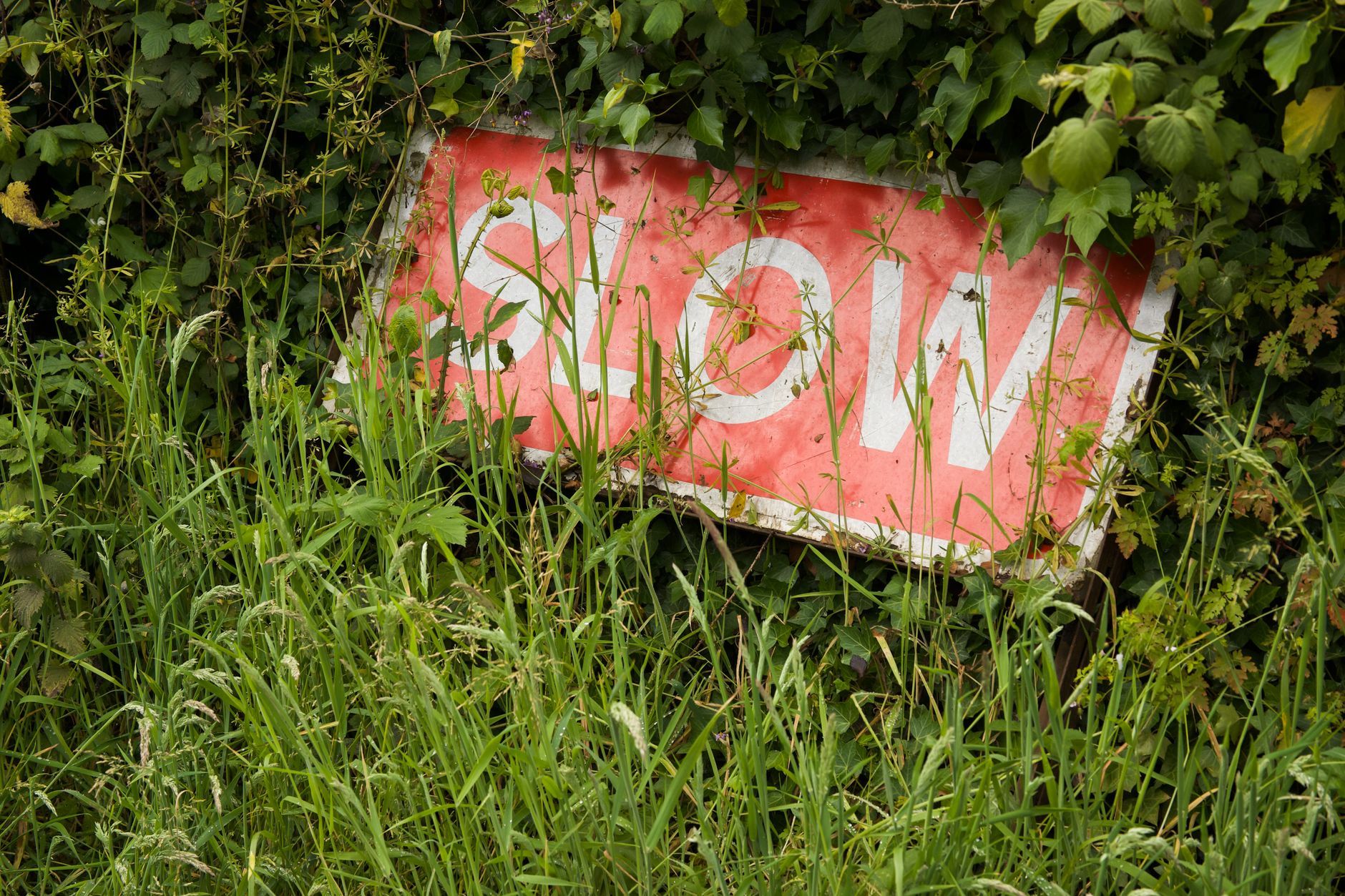
I’ve tried this in the past and completely failed, finding myself getting angry when I tried to run at a slower pace. Some of that was physical; for all the good a slow run does, it rarely results in a runner’s high and some stress burned off. But some of it was psychological. I log all my runs on Strava, and for too long the stat I was most interested in was pace, so deliberately running slowly left me missing that little thrill when I looked at the details later on. Changing that approach has been fantastically liberating.
To start with, that change was mostly organic. After I pulled out of the trail half marathon in the spring I started to realise quite how exhausted I was, and having run out of energy to fight it all that was left was to slow down, stop worrying about distance or pace, and walk if I needed to. Luckily for me I haven’t been doing this alone as our weekend runs had gone to basics for a few of us, and as the weeks went on, the balance of running to walking slowly shifted back towards more running. At the same time, I came across a number of blog posts about the value of running slowly, and of letting go of the ego. I firmly believe that we need to find the right advice at the right time for it to be of any use at all, and these came at exactly the right time for me. I realised that continually comparing my pace to what I’d been able to do five or six years ago was about pride, and was never going to help me move my running forward. So I stopped giving pace more than a glance, and focused instead on heart rate and training zones. Rather than berating myself for being slower, I started to celebrate keeping my heart rate below a certain threshold, or being able to run 5k in zone 2 without needing to walk to bring my heart rate back down. These are measurable gains, which are mirrored in how I feel after a run – no longer am I drained and exhausted, I can finish happy and satisfied, knowing that the training is working and that there is plenty more in me for next time.
For the first time, I feel as if I have a training set-up that actually works, each part of it feeding into the other. The slow runs are increasing my fitness and endurance, the Tuesday sessions with the club give me the buzz of pushing hard for a limited time, and the strength work in the gym has given me the power to make the most of those Tuesday sessions. And crucially, it won’t fall apart if I miss a session, or have to chop and change the order.
The most important goal of all is to keep running, to keep doing something I love for as many years as I am able. There will come a point where I commit to a race or a route and have an external goal again, but for the time being, I am excited to see where these slow goals will take me. And being excited about running again is the best motivation of all.

